Permitting Reform: Is it time for America to start building big things again?

Updated November 20, 2026
I don’t often cover national political topics, but right now, there’s a once-in-a-generation piece of legislation you should know about. The United States Senate just passed a permitting reform bill (62-33) that could dramatically change how large infrastructure projects move through approval and review processes. It now moves on to the U.S. House of Representatives. If this is important to you, contact your federal House Reps and Senators to let them know where you stand.
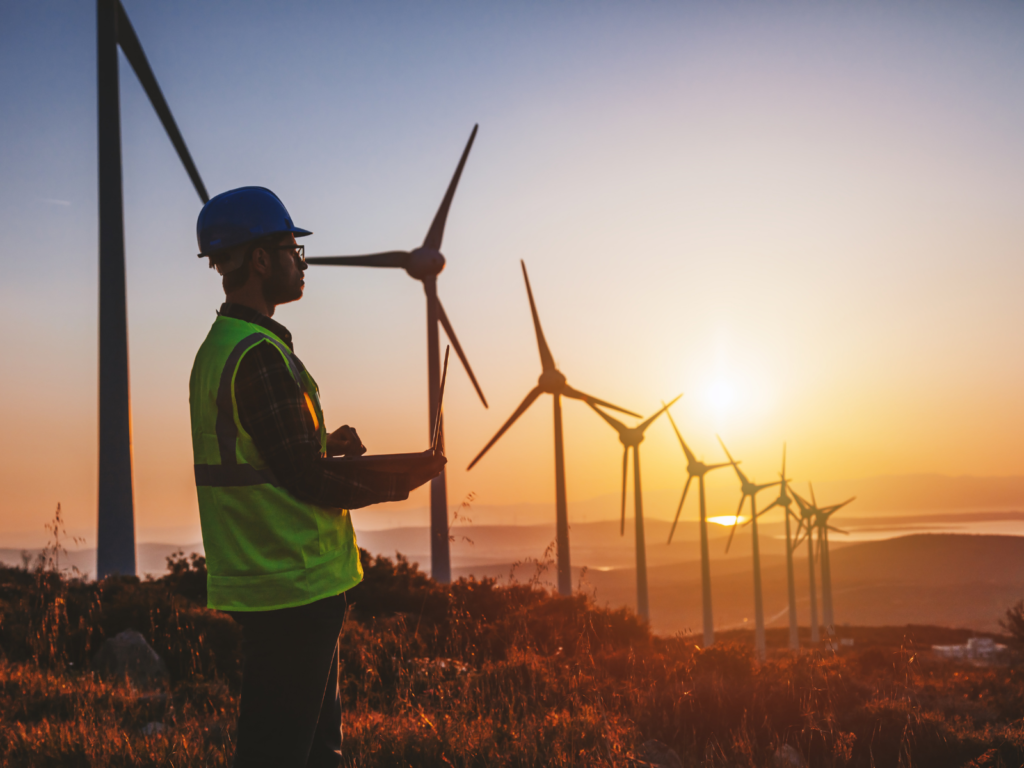
Once upon a time, America built big things. The Manhattan Project. The Federal Highway System. The Hoover Dam. The Empire State Building. And so much more.
But over the last few decades, red tape, environmental regulations, increased litigation, an explosion of NIMBYism (“not in my backyard”) sentiment, and other barriers got in the way. Many of these obstacles arose from good intentions. Large industrial projects left immense damage in their wake, like toxic contamination or ripped-apart neighborhoods. Legislation making it harder to build anything felt like an appropriate response to put people over profit.
Today, the layers upon layers of legislation and regulations, combined with an environment of endless litigation and partisan flip-flopping on policy, have made it nearly impossible to build much of anything we would consider “big”: new power plants, public transit, power transmission lines, enough housing for a growing population, and more.
Currently, the US Congress is working through a permitting reform bill called the Bipartisan American Affordability and Jobs Act (BAAJA), a once-in-a-generation bill that cuts through a ton of red tape and would, theoretically, unleash the construction of big projects in our country. The bill primarily relates to the energy industry, though its impacts reach beyond that, as it eases permitting for all sorts of large construction projects. It’s widely agreed that the biggest beneficiaries of the bill would be oil and gas, followed closely by clean energy and eventually energy transmission lines (the big power lines that carry electricity long distances).
The bill is almost 500 pages. I certainly haven’t read it, and I likely wouldn’t understand the legal implications even if I did. But there’s a pretty consistent consensus among different interested groups about how they feel.
The fossil fuel industry loves it. Data center advocates love it. The renewable energy industry likes it and thinks it’s necessary to build a meaningful amount of renewable energy. Green groups (i.e., environmental advocates) for the most part loathe it (with a couple of exceptions).
Pretty much everyone agrees it will eliminate a huge number of obstacles that have historically gotten in the way of building new industrial projects (for better and for worse). The New York Times has a comprehensive but not overwhelming article on this bill that’s worth reading; here’s a gift link to read it even if you don’t have a subscription.
Here are more up-to-date pieces on the bill from The New York Times (gift link) and The Hill that break down some of the bill’s major provisions.
Among other things, the bill, as currently drafted:
- Streamlines the review process for federal approval of permitting: removes some legal privileges to sue to stop projects, adds time limits for certain approvals (after which projects are automatically approved if a decision hasn’t been made), and more.
- Overhauls landmark environmental legislation from decades past, making it easier for the federal government to approve tons of projects, from pipelines to transmission lines to public transit.
- Removes some of the autonomy sovereign tribes and states have to block industrial projects they don’t want (ie., gives more power to businesses and the federal government to dictate large infrastructure projects). This makes it both a more free-market and less states’ rights bill, two principles that often don’t compete with each other.
- Includes several mechanisms that prevent future administrations or new legislation and regulation from changing the terms on which a project is built or operates. This creates predictability for projects, but some are concerned it could have unintended consequences as new technologies develop, we better understand the impacts of global warming and climate change, and projects harm specific communities with no recourse. For example, can you shut down a coal plant in fifteen years when we almost certainly will no longer need it if it’s already been approved under this bill? There’s disagreement about how this might play out legally.
Data center analogy re: sentiments about the bill
It’s not a perfect correlation, but how you feel about large-scale data centers might inform how you feel about this bill. I focus on large-scale data centers because we’ve been building smaller ones for decades. The enormous ones being built to power exponential AI growth are new.
If you believe we need to build more massive data centers to support American progress and stay ahead of the rest of the world in energy development and AI, then you probably support this bill. If you’re skeptical about building large-scale data centers and think local communities should have the final say on what gets built where they live, you may not love this bill.
Fossil fuel industry on the permitting reform bill
Fossil fuel companies love the bill for obvious reasons. They just want to build more pipelines and drilling infrastructure, and have long been indifferent to the side effects of that extraction and fuel transportation locally and globally. It’s widely agreed that the bill puts oil and gas first.
Clean energy industry on the permitting reform bill
Clean energy companies also love the bill. They’ve been more hampered by litigation and political opposition than fossil fuels, so they view this as a win. Clean energy, and renewables (solar, wind, and batteries) in particular, are the cheapest forms of new energy, and the industry expects to fare well under this permitting reform bill based on economic measures. When people need more energy, they’ll choose the cheapest option (i.e., renewables).
Moreover, laws of physics mean fossil fuel prices will inevitably rise over time while renewable energy prices continue to fall. It’s a commodity-versus-technology race.
Fossil fuel energy solutions rely on a commodity that gets more expensive as the easy-to-find fuels get used up, and each new, deeper, or harder-to-drill well costs more than the last. Fossil fuel energy solutions always have fuel inputs to pay for as well.
Renewable energy is a technology with limitless and free “commodity” inputs. Once the infrastructure is built, sun and wind are free. Did you know the sun delivers enough energy to the planet in 10 seconds to power all our energy needs for the entire day? Once we can capture that energy, it’s effectively limitless.
As we’ve seen with technology over many decades, the cost to build it decreases over time, and renewable energy technology has followed this expected downward trend over the last couple of decades.
Especially outside the US, people and countries have been investing in solar, wind, and batteries en masse because it just makes so much sense. We live in a fossil-fuel propaganda fog in the United States that keeps many of us from seeing how the world is moving away from fossil fuels rapidly because renewables are less expensive and more reliable.
Renewable (or limitless) energy builders believe that, if the floodgates are open for everyone to build, they will win on price (with societal benefits as an added bonus). We already see this in places like Texas, which has the closest thing to free-market energy in our country. In recent years, Texas (of all places) has been building mostly renewable energy because it’s the cheapest option.
The clean energy industry also cares more about being able to build its own things and less about fossil fuels being able to build, too. With the growth of data centers, they essentially believe there’s enough demand that fossil fuel expansion won’t overtake their market share.
Note on defining “reliable”
As an aside, in the United States, we think of “reliable” as something that can run all the time, with no consideration of cost or availability, partly because we have extensive domestic fossil fuel capacity.
But countries around the globe saw, after Russia attacked Ukraine and the United States chose to go to war with Iran, that fossil fuels are not reliable options when markets can be thrown out of whack overnight by another country’s geopolitical decisions. The United States is anything but a reliable partner to power their lives.
Once one has solar panels, no number of wars in other countries will take away the power from the sun or spike fuel prices to untenable levels. Combined with batteries, renewable energy is far more reliable and predictable than any fossil-fuel alternative when we zoom out internationally.
Eventually, the shift to renewable energy will become so dominant that it will overshadow fossil-fuel misinformation in the United States. Americans will see what other countries have and want: super cheap rooftop solar, really nice and affordable EVs, home batteries that provide energy security, enormous energy potential without the pollution, etc. Unfortunately, we aren’t there yet.
Green groups on the permitting reform bill
Most green groups (but not all) hate the bill with a fiery passion. They see it as a bill that neuters or outright kills several important environmental regulations that have long protected communities from massive pollution and degradation. Environmental models project the bill has limited impact on reducing greenhouse gases over the next couple of decades, which is an existential crisis.
The bill includes clauses that allow for “permit certainty,” which limits the government’s ability to stop a project after it receives initial approval. This has been a sticking point for environmentalists who take a long-term view of how this consideration might impact energy matters far into the future.
While green groups want to see more clean energy, they believe this bill offers so many concessions to fossil fuel development that the harm outweighs the good. Particularly in light of the current administration’s disdain for renewable energy and the incoming Democratic control of both the House and Senate, they want to wait until next year to negotiate a version of the bill more favorable to clean energy. Others, however, don’t see a path to a newly negotiated bill that would survive through Congress and be signed by the President.
Local challenges to large infrastructure development
It’s unclear exactly how this permitting reform bill would limit state and local autonomy over the construction of new projects, but it’s widely understood that the bill’s intent is to reduce that agency. Local opposition has been a common tool to use to prevent these industrial projects from moving forward (sometimes in good faith and sometimes for nefarious motives).
The bill was negotiated behind closed doors by four senators
Four senators (and their staff) worked for many months, maybe years, to hash out this bill. They were:
- Shelley Moore Capito (R-WV), Chair of the Senate Environment and Public Works Committee
- Sheldon Whitehouse (D-RI), Ranking Member of the Senate Environment and Public Works Committee
- Mike Lee (R-UT), Chairman of the Senate Energy and Natural Resources Committee
- Martin Heinrich (D-NM), Ranking Member of the Senate Energy and Natural Resources Committee
Senator Whitehouse has long been an environmental powerhouse in Congress. Senator Lee is a far-right fossil fuel stan. The other two are somewhere in between.
President Trump has already said he would sign the bill. It will most likely pass the House, where it needs only a simple majority, and Republicans (so far) widely support it.
It’s currently being negotiated in the Senate, where its fate is uncertain. It’s the Senate’s top priority for this lame duck session. It needs 60 votes to pass, which means bipartisan support.
Given the recent election’s pretty clear mandate on data center development and the desire to slow development, I don’t think most Americans would love this bill in its current form. But fossil fuel and clean energy industry advocates are working hard to push it through.
Environmental folks are fighting like hell to stop it (or at least force some meaningful changes before it passes). I suspect, however, that if environmental groups can get some of their most pressing concerns addressed, the bill might actually be a reasonable compromise that solves a host of problems.
What can you do?
Contact your federal representative to let them know where you stand. Depending on where you live, your local US House Rep is probably Mary Gay Scanlon or Chrissy Holulahan. I am not sure how these two reps will vote on this bill in the House (though the House only needs a simple majority and can pass it without Democratic votes). Either way, contact their offices and let them know whether you’d like them to vote for or against the bill. Not sure who your House Rep is? Check here.
Our two Pennsylvania Senators are John Fetterman and Dave McCormick.
McCormick will absolutely vote for this bill; this is right in his wheelhouse. He’s a business-first guy and has been holding summits not only to encourage massive energy and data center buildout but specifically to build it in Pennsylvania. He says, “There’s no question that the path to American energy dominance runs directly through Pennsylvania.”
You should definitely call his office to let him know where you stand. But if you’re against it, he’s probably not your guy.
Fetterman is all over the map. Definitely call his office to express your position. I have no idea where he’ll land on this (or anything, for that matter).
If this bill passes, expect Pennsylvania to be a targeted hub for both extensive fossil-fuel and data-center buildout. Data centers would prefer to be closer to energy sources, and the Marcellus Shale in Western PA is waiting to be fracked to fuel our AI-dominated future. For better or worse (you decide), this bill will streamline development of the big projects our country was once known for but has felt like an extinct era in recent decades.