Who funds the fire department? They need our support.

Any idea how much a new fire truck costs? How much does it cost to suit up a firefighter from head to toe? Probably more than you think! And if you think gas prices are up lately, wait until you find out how much fire department costs have increased in the last decade or so.
This week, you should have received an envelope in the mail from the Concordville Fire & Protective Association, our local fire department. Don’t toss it. Open it. The fire department’s annual fall fund drive arrives during Fire Prevention Week, October 4–10, and they really need our support.
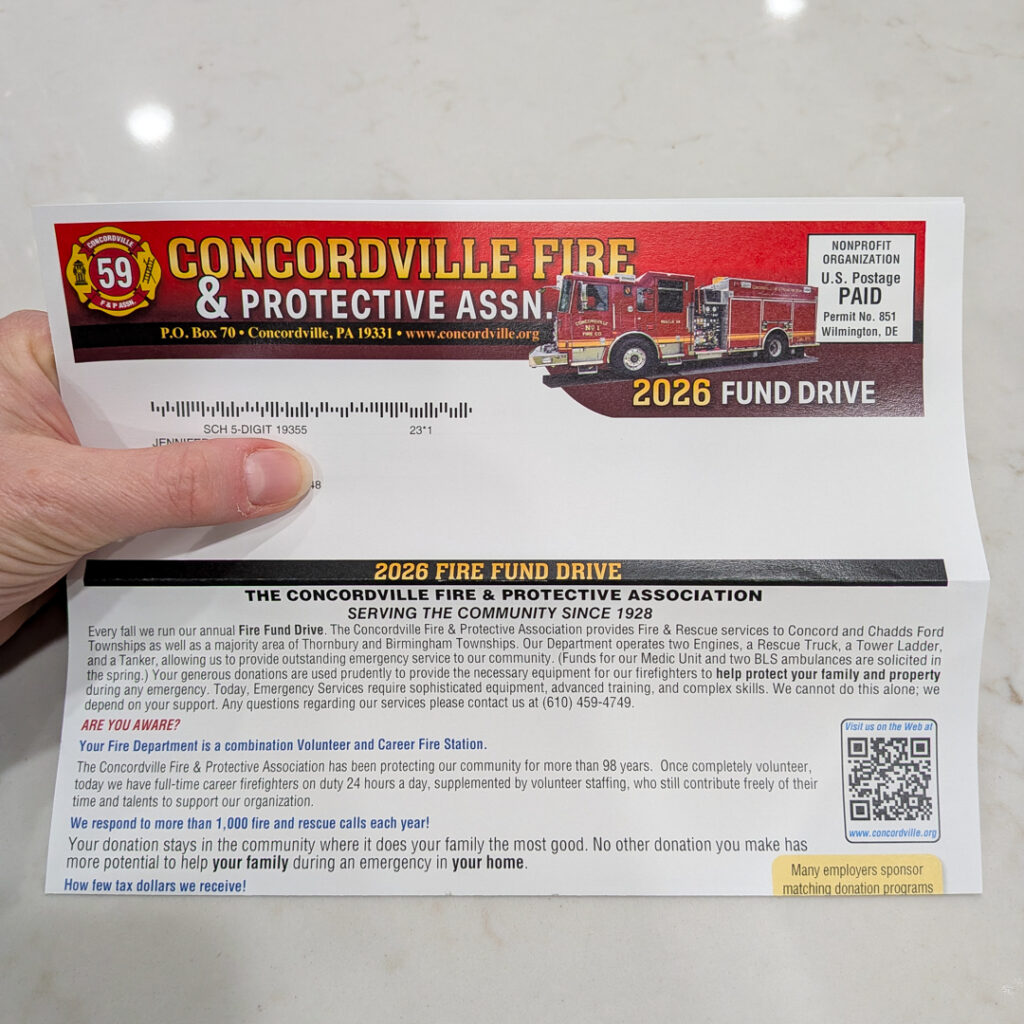
Despite what you might think (I didn’t know either), the fire department is a nonprofit organization that receives only about 35% of its funding from tax dollars. The annual fund drive is one of the most direct ways you and I can ensure that the department has a fire engine, a trained crew, and proper gear ready when someone dials 911.
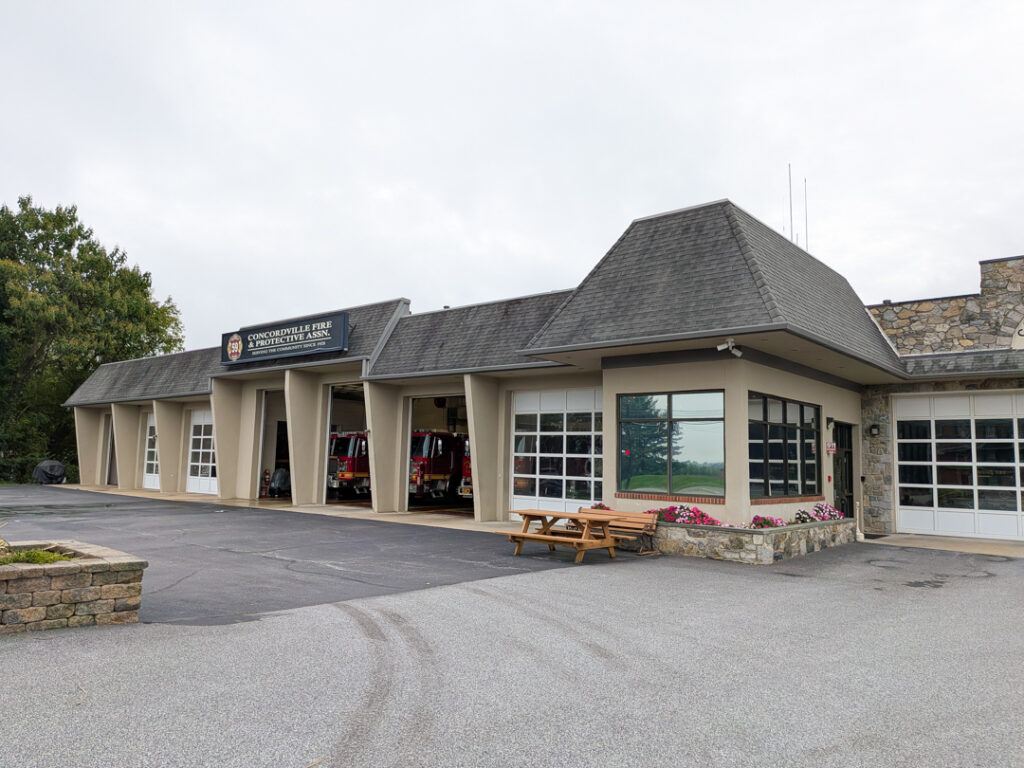
This past week, I visited the Concordville Fire & Protective Association to learn more about their operations and their funding. In short, we have a growing community problem, and we need to decide how to address it.
Side note: I also had a long, informative conversation with the head of the Chester Heights Fire Company a few weeks ago. They’re experiencing the same trends. The expense increases discussed below aren’t unique to one department or one geography. This is a nationwide crisis.
Skyrocketing expenses (a national problem)
For the last several years, fire departments, including Concordville, have been requesting significantly larger contributions from the townships they serve to cover budget increases driven by a variety of circumstances.
📌 It’s becoming a point of contention among Chadds Ford Township personnel. Put a pin in this, because we’ll come back to this at a later date.
For now, it’s important to know that the fire department’s costs are skyrocketing for reasons beyond their control. Local tax dollars are meeting some of these needs but woefully falling short.
💰 If it’s in your budget, they could really use financial support to keep their operations running effectively. Their annual fund drive is a great way to show support and ensure we have a well-functioning fire department in our community. Give now at concordville.org or mail the reply card in your letter along with a check or donation information.
Why are fire department costs increasing so much?
Several reasons have driven fire department funding requirements up over the last decade or so. Three big drivers of budget growth are rising equipment costs, new safety standards, and changing employment structures. Let’s discuss.
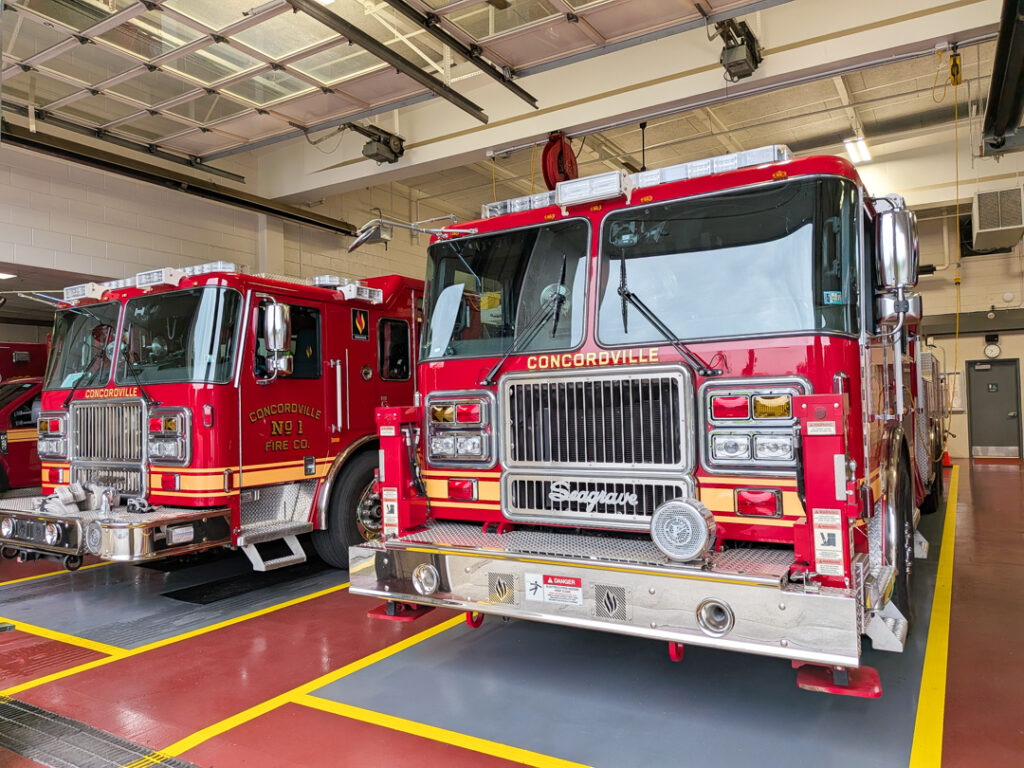
Fire trucks more than double in price
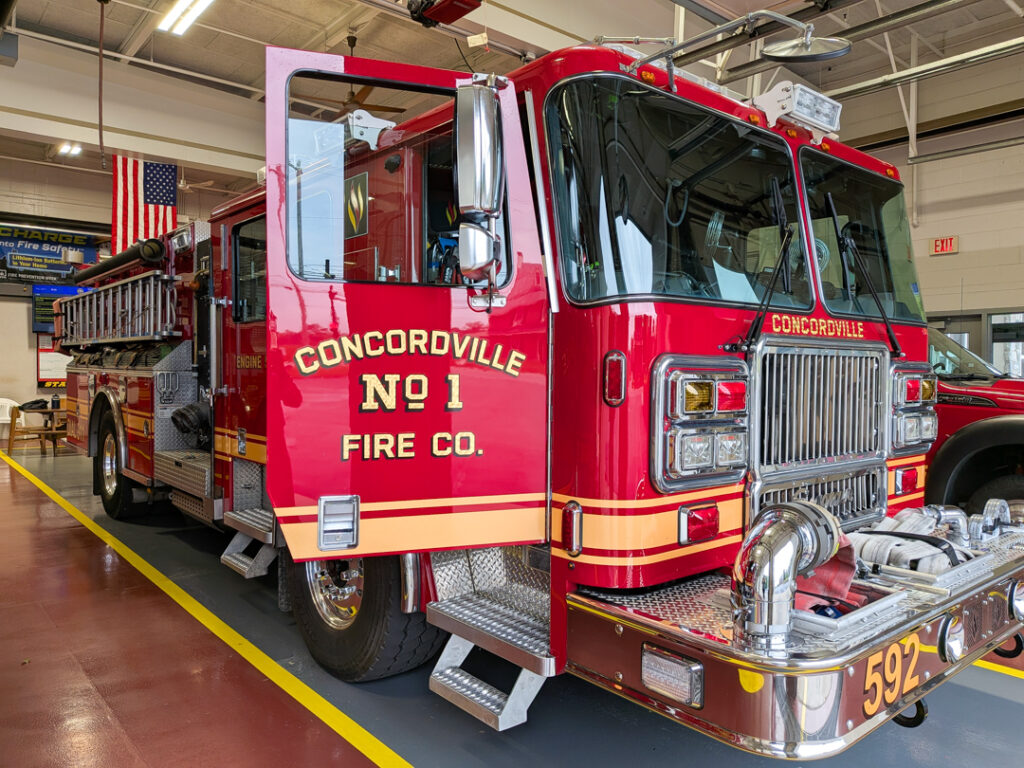
The cost of a fire truck, a highly technical, custom vehicle, has more than doubled in the last decade. The cost significantly depends on the type of truck. But a truck that cost $500,000 a decade ago likely costs more than $1,000,000 today. Concordville estimates that its next new truck (not yet ordered) could cost more than $1.3 million.
This challenge isn’t unique to our local departments. The International Association of Fire Fighters concurs that these challenges are widespread. They are “demanding antitrust authorities investigate the companies that make fire trucks, saying industry consolidation has led to skyrocketing costs and years-long wait times, endangering firefighters and the public.” Specifically:
- Prices have doubled in the past decade. For example, one Florida county paid about $550,000 for an engine in 2022. The same engine, essentially unchanged, cost $915,000 by late 2025. That’s a 64% increase in four years.
- Wait times for new trucks are 4 years or more, which also means more repairs and maintenance costs on older trucks that can’t be replaced yet.
- Many departments must sign contracts using “floating” pricing, so the final bill can climb after the order is signed. They have no choice but to sign a contract without a fixed price.
These budget uncertainties and expansion pose challenges for any organization, especially those that rely heavily on taxpayer funding and donations, which can be hard to increase quickly to meet financial demands.
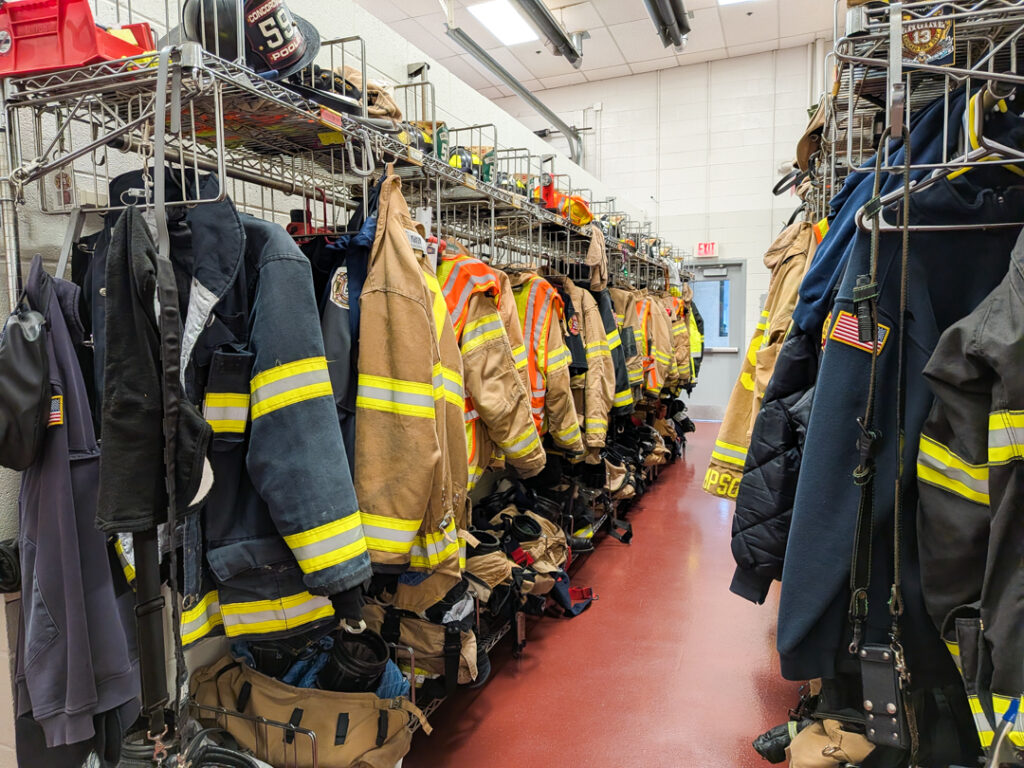
Protective gear: twice the price, and for good reason
Every firefighter who walks into a burning building wears turnout gear (the heavy coat, pants, boots, helmet, gloves, etc.) and a self-contained breathing apparatus (SCBA), the air pack on their back. Both have roughly doubled in price.
- Turnout gear: Outfitting one firefighter used to cost about $2,500. Today it can run $6,000. Departments typically issue two sets per firefighter and replace them every five to ten years. This matched my conversations with Concordville Fire last week.
- The PFAS factor: For decades, turnout gear was treated with PFAS, known as “forever chemicals,” for water resistance. Research has linked those chemicals to cancer, and departments nationwide are switching. PFAS-free gear costs $4,000 to $6,000 a set, about 30% more than conventional gear. This shift in materials, along with overall price increases (what hasn’t gone up in price in the last ten years?!), drives the ballooning price tag for firefighters’ personal protective equipment (PPE).
- Air packs: Air pack costs have doubled, too. Alexandria, Va., paid $5,195 per SCBA in 2014–15. The equivalent equipment cost $11,900 by 2022. Our local departments have to make similar investments.
- Rolling standards: National safety standards for breathing apparatus are updated about every five years, and new versions often don’t work with old ones. Departments usually have to replace their whole fleet at once, so staying up to date with the latest safety measures requires ongoing investment and upgrades.
Trucks, turnout gear, and air packs are essentially fixed expenses for departments if they plan to meet the full needs of the community. Departments have little flexibility to “skimp” on these investments to save money without putting the community and firefighters at risk.
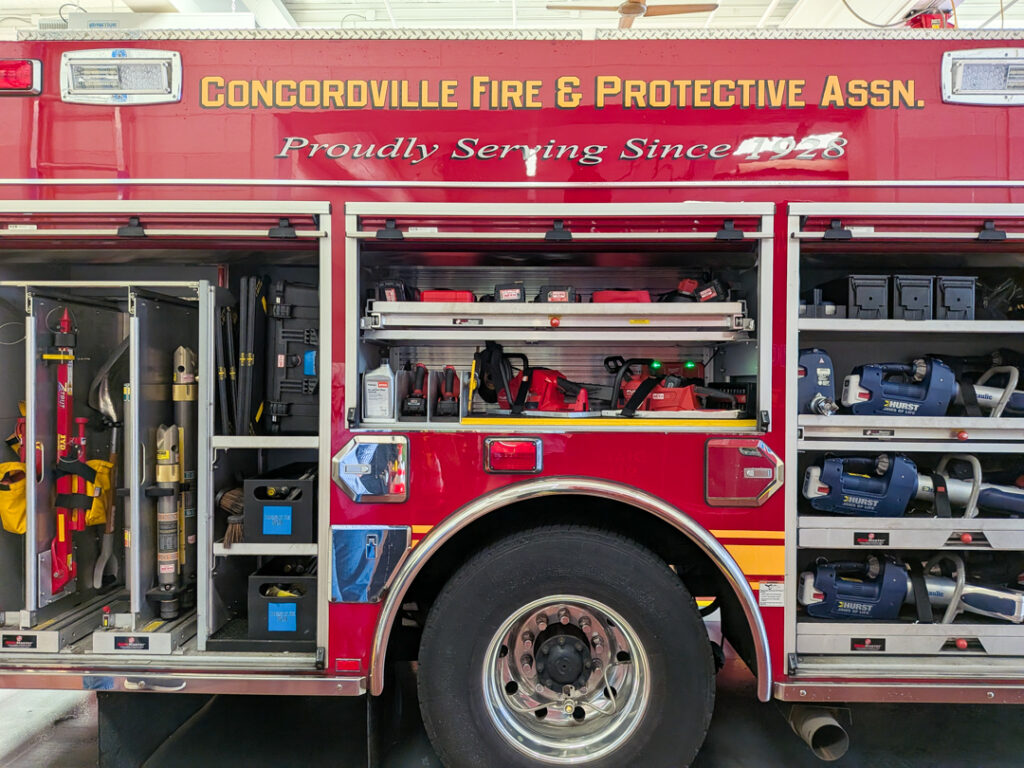
People: the biggest shift of all
In recent years, labor costs have also risen drastically. Volunteer staff have declined, and this issue extends beyond one department.
Pennsylvania built its fire service on volunteers. In the 1970s, the state had about 300,000 volunteer firefighters. By 2018, a legislative commission counted about 38,000. So this challenge is neither new nor isolated.
Our area followed the same path. Companies that once ran almost entirely on volunteers now increasingly rely on career staff who earn a living wage and benefits. According to the 5-year budget summary I received from the Treasurer, Concordville Fire labor costs account for $3.0 million of its $3.5 million (86%) in total annual budgeted expenses for 2026.
When the department loses volunteers, it also loses an important but quieter benefit. Many of yesterday’s volunteers were electricians, mechanics, plumbers, and carpenters by day. When something broke at the station or on a truck, a member often fixed it for free.
Today’s career firefighters are highly trained in firefighting and emergency medicine, not the building trades. Outside contractors must do more repairs and maintenance at market rates because of technical expertise and liability concerns.
Why it’s all costing more
Inflation explains part of it. It doesn’t explain a doubling. Five forces are stacking up at once.
- A consolidated truck industry. A handful of private-equity-backed companies now own most major fire truck brands. A September 2025 U.S. Senate investigation found their profit margins tripled after consolidation, from 4–5% to more than 13%. Manufacturers point instead to demand, labor shortages, and supply costs.
- Materials and tariffs. Aluminum, a core material in fire trucks, rose more than 45% between January 2024 and June 2025.
- Better technology and safety. Cameras, integrated electronics, foam systems, and safer cabs add to build costs and long-term maintenance.
- Cancer prevention. PFAS-free gear and cleaner-station practices are new costs that simply weren’t on a budget ten years ago.
- Fewer volunteers, more calls. Paid staff, plus repairs that used to be donated labor, now show up as line items. More integrated home alarm systems also trigger more response calls than in days before monitored alarm companies sent calls automatically.
Some of the cost increases protect firefighters and the community. Some of it flows to manufacturers’ margins. Both hit the budget, and ultimately land on us.
Why treat fire departments differently than other municipal service providers?
Understanding the costs is crucial to telling the story about why increased funding is critical for the fire department. But it’s also necessary to keep the discussion centered on how we fund basic community services more generally. Consider these questions:
- Why is the fire department expected to be a 501(c)3 non-profit organization while our police and public works personnel, for example, are municipal employees with corresponding benefits?
- Why do we ask the fire department to raise its own funding to pay for what amounts to a community insurance policy?
- Why do we ask fire departments to host bake sales and chicken dinners but not ask the same of police officers, municipal public works employees, etc…? Wouldn’t we rather they spend their time serving and training than baking and planning parties? (Not to mention, no bake sale or chicken dinner is going to fund a six-figure funding gap.)
- Why do we challenge the fire department’s cost increases so vigorously but don’t bat an eye at increases for similar departments? In a recent Chadds Ford Township meeting, no one questioned why the cost of rock salt for winter roads increased so much. But at the September 24, 2026, Finance Committee meeting, a member of our Chadds Ford finance committee said about the fire department, “They’re not great with math,” and “These guys must be buying gold-plated trucks” (among many other disparaging comments). This despite widespread coverage of skyrocketing vehicle and gear costs nationwide. Why are we talking about our first responders like this?! We clearly need a more comprehensive understanding of the facts.
Fire department funding compared to other home expenses
We can also think about funding in the context of other home expenses. If cost approximates value, why do we pay so little? Do we not value the service?
The fire department is an insurance policy, not all that different from homeowners insurance. Right now, we will pay $128 per household per year in Chadds Ford through our local taxes (based on the budgeted tax allocation for 2027). This only partially funds the department’s full 2027 request of about $323,000. If we funded the full request, each household would pay $180.
How does $180 per year compare to your:
- homeowners’ insurance
- Amazon Prime subscription (currently $140/year)
- landscaping services costs (does someone else cut your lawn for you?)
- home cleaning services (do you hire this out?)
- annual coffee budget
- the list could go on…
How does it reflect on our community when our township won’t fully fund the fire department? With firefighting costs rising so steeply, who will foot the bill if it’s not us? Are we willing to forgo a local fire department?
We seem to hold the fire department to a different standard than many other public service folks. Maybe we should revisit that? And maybe… just maybe… it’s time to start discussing a dedicated increase in fire department tax funding through a referendum (or similar).
Answer the call this fall
Our fire company shows up for us thousands of times a year. The fall fund drive is our turn to show up for them.
- Give. Return the card in this week’s fund drive letter, or donate at concordville.org. Every gift, no matter the size, goes toward the trucks, gear, and people who answer when you call 911.
- Join. If you’re interested in signing up and serving a very important role in the community, the company is recruiting. Ask about volunteering at 610-459-4749 or [email protected].
- Practice fire safety. This year’s Fire Prevention Week theme is lithium-ion battery safety. Charge phones, e-bikes, and tools on hard surfaces, and unplug them when they’re full. Fewer fires are the cheapest form of fire protection.
The fall fund drive envelope might still be on your counter. Hopefully you haven’t tossed it yet. Open it and give what you can, or donate online if that’s easier.
What do you think?
I’d love to hear your thoughts and questions on this community challenge. It won’t resolve itself anytime soon, and it will likely need a long-term, sustainable, and predictable funding solution going forward. What are your ideas?