UCFSD leads with the power of the sun

This fall, Unionville Chadds Ford School District hired its most powerful employee yet: the sun! ☀️ Roughly 900 American-made solar panels began feeding electricity into Unionville High School on September 9, turning the sun’s rays into money-saving energy that powers our kids’ education.
In the last month alone, the 650-kilowatt array produced more than 58,000 kilowatt-hours of electricity, enough to power one of the district’s elementary schools for the same period, according to UCFSD Director of Facilities James Whitesel.
Local company TerraSol Energies built the system, and Pennsylvania firm Spotts, Stevens and McCoy designed it. The panels cover roughly 70% of the roof, making it the second-largest rooftop solar system in Chester County.
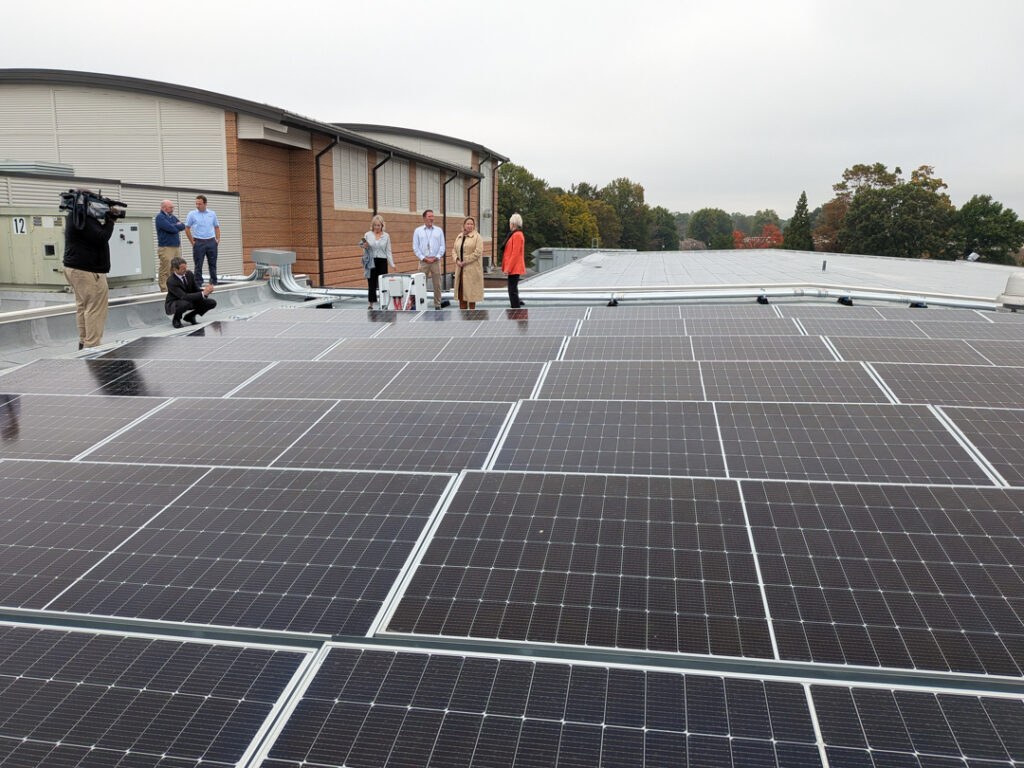
Leading the Solar for Schools program
The district is one of the first in Pennsylvania (and the first in the Philadelphia region) to finish a project under the state’s Solar for Schools grant program. Unionville was one of 73 schools to receive funds from the program’s first round of $22.5 million.
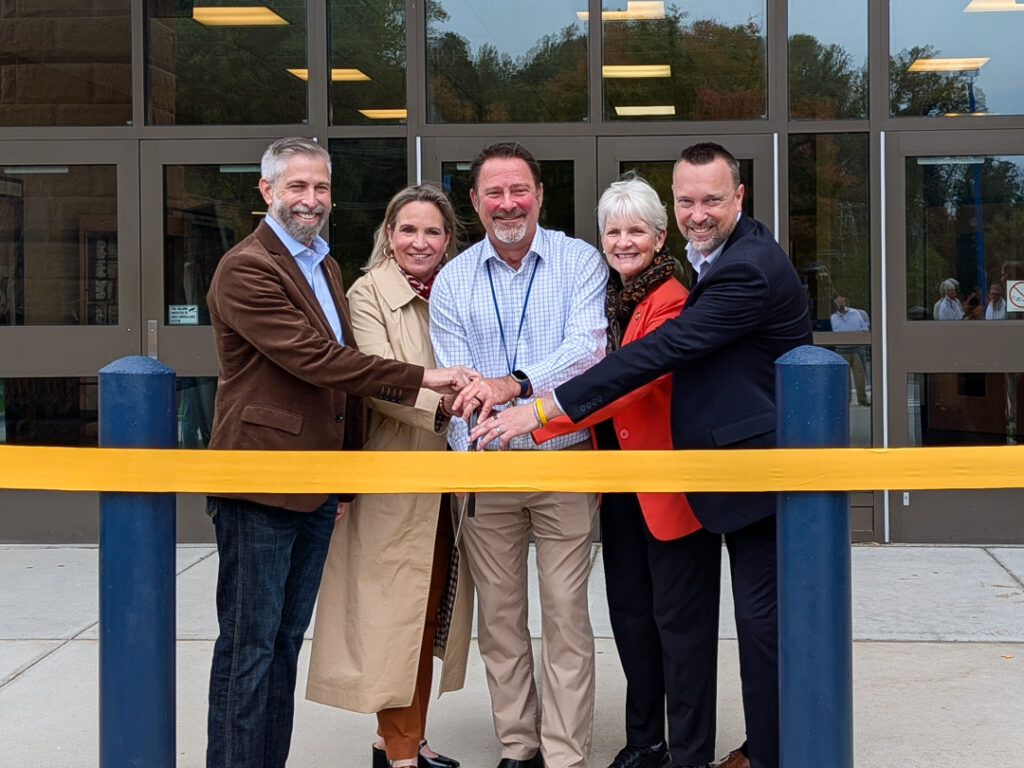
State Senator Carolyn Comitta was the first elected official to speak at the UCFSD ribbon-cutting ceremony on October 16. She represents a portion of the school district, and she helped champion the state’s Solar for Schools program as a co-prime sponsor of the bill in the Pennsylvania Senate.
Since 2021, Comitta has been on the Pennsylvania Senate Environmental Resources and Energy Committee. At the ceremony, she noted that Pennsylvania ranks 47th in the nation for solar, wind, and geothermal generation. Solar for Schools is one attempt to change that.
Schools are a natural fit, Comitta said: it “just makes sense that they are powered in a sustainable, environmentally friendly, and cost-saving way.”
A good deal for taxpayers
The rooftop solar array is a favorable deal for taxpayers, with a modest upfront cost and significant savings over the panels’ lifespan. The Solar for Schools grant covered nearly $300,000. Additional federal rebates and PECO incentives cut the district’s net cost to roughly $450,000, which the district expects to recoup in under seven years.
The solar array is projected to supply about 25% of the district’s electricity and save at least $75,000 a year, a projection that will grow if and when utility rates climb. Over the panels’ expected 25-year life, Whitesel estimates savings will top $1 million.
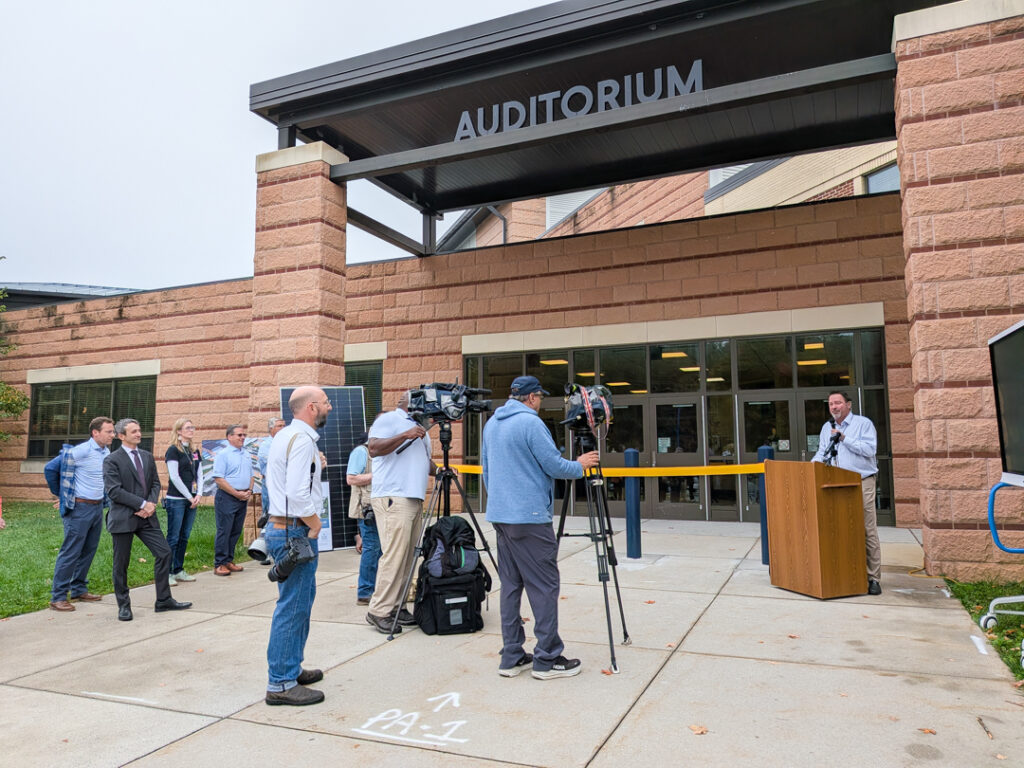
State Rep. Christina Sappey, who represents part of the UCFSD district, discussed the state’s rationale for supporting the Solar for Schools program at the UCFSD ribbon-cutting ceremony. She said utility bills are one of public schools’ largest operating expenses. The grant program uses state funds to ease the burden of school expenses on local taxpayers in a meaningful and sustainable way.
Principled stewardship, in practice
Superintendent Dr. Tim Hoffman tied the project to one of the district’s four core values: principled stewardship. That means making the most of the district’s resources (financial and natural), he said, and modeling fiscal and environmental responsibility for students.
“Efficiency with our resources is critical for our long-term financial health and decreases the overall burden on our tax base to keep up with rising costs,” Hoffman said in the district’s announcement.
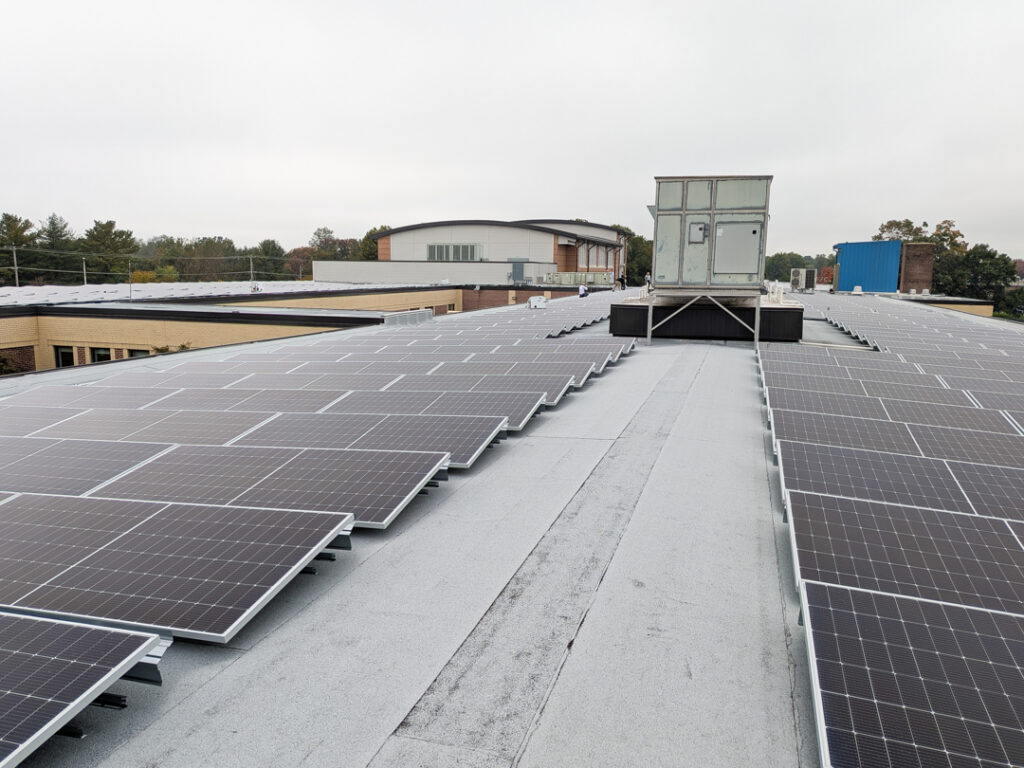
A classroom on the roof
The array also serves as a teaching tool. Students can access solar system data, and the district is working with high school staff to integrate it into the curriculum. Students can also examine the system during supervised rooftop visits.
“The panels on the roof are producing electricity for our school, but the most important thing they’ll produce is an opportunity for our students to learn about the energy systems of the future,” Whitesel said in the district’s announcement.
These opportunities align with UCFSD’s commitment to “college and career readiness,” a principle intended to introduce students to the wide array of viable options available after high school and define post-graduate success as something broader than attendance at certain types of colleges and universities.
Jobs adjacent to projects like this (solar system design and engineering, solar system installation, electrical work, clean energy infrastructure and management, etc.) are growing fast. The U.S. Bureau of Labor Statistics projects solar installer employment to grow 37% from 2025 to 2035, much faster than average. The rooftop solar system can introduce curious students to many of these potential fields.
Recognized beyond the district
The project’s significance reaches outside the district. Two weeks before the ribbon-cutting, on Oct. 1, the Pennsylvania Solar Center presented State Senator Carolyn Comitta with its Lodestar Award at its Solar Soiree at Victory Brewing.
The Lodestar Award, named for the star sailors once steered by, usually honors Pennsylvania businesses, schools, nonprofits, and congregations that have invested in solar themselves. This year, Comitta was a notable addition to the roster as an elected official. The center called Comitta a great partner and a longtime solar advocate, going back to her years as West Chester’s first female mayor.

Whitesel and TerraSol Energies both attended the event, and the PA Solar Center celebrated the UCFSD system installation as part of her notable record. This project is a shining example of how good policy can win for everyone. It’s also a perfect example of the power of renewable energy and well-placed government spending to reduce expenses in our community.
UCFSD led the way with this program and will hopefully have many schools follow in its footsteps to “hire the sun” as their best free employee. As Whitesel put it at the ceremony: “I’m very confident the sun is going to continue coming up every morning and now, thanks to this project, the sunshine is working for Unionville-Chadds Ford School District.”