
Craig Williams voted against a popular common-sense gun law

It failed; and he could have been the deciding vote to pass it 💔
On Monday, I drove to Harrisburg to lobby for clean energy policies that should help reduce energy costs for Pennsylvanians. (More on that another day.) While there, I saw a group of volunteers in red Moms Demand Action shirts, presumably lobbying for common-sense gun regulation.
I noticed a little girl in tow, about six years old, in her pink princess dress and carrying her teddy bear, listening to a group of mostly moms around her pleading with legislators to do something (anything?) to curb gun violence in our country. Has this become just another Monday in our country for a little girl in a pink princess dress with her stuffy? 💔
I wondered what specific legislation they had on their agendas. Tuesday, I found out. Common sense gun regulations around red flag laws, ghost guns, and background checks.
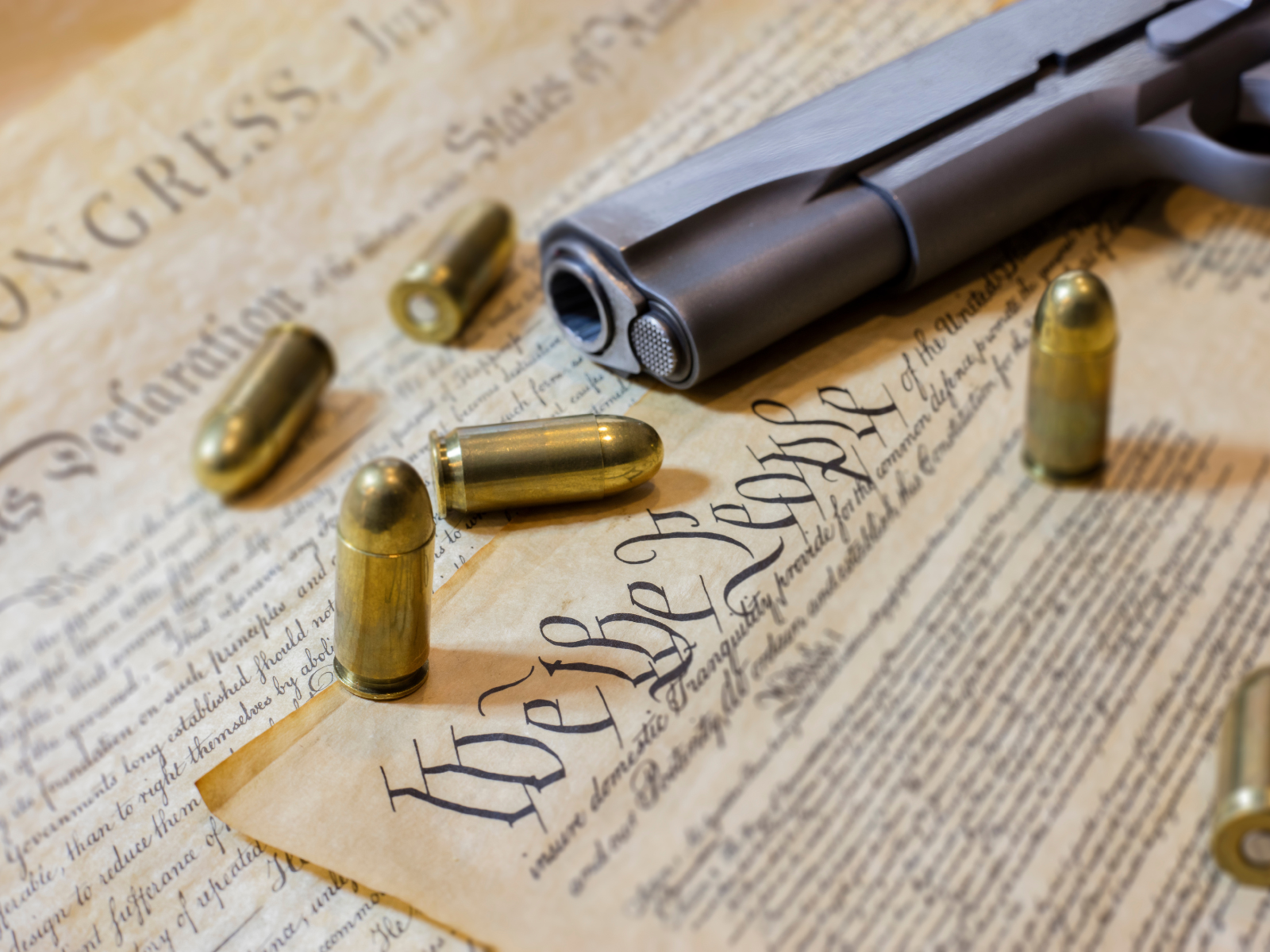
A vast majority of Americans support some common-sense gun laws, so chances are that includes you. Even many gun owners support common-sense gun regulation. They understand as well as anyone the gravity of guns, the respect owed to firearms, and the due care required of responsible gun owners. Yet as gun violence sadly escalates in our country, many of us feel helpless to do anything to change our fate.
On Tuesday, the Pennsylvania State House of Representatives voted on three pieces of legislation that have strong bipartisan support among citizens: red flag laws, ghost gun regulation, and background checks. Despite popular support, they ironically remain highly partisan issues in congressional chambers. 🤬 Aren’t the representatives supposed to represent us??! Is that too much to ask? FFS.
Our local Representative, Craig Williams, voted against red flag laws and ghost gun regulations, where his vote really mattered. Thanks for nothing, dude. I’m unimpressed. He voted in favor of background checks, but his vote wasn’t the deciding vote on the matter (par for the course, muddying his voting record when it doesn’t matter to the outcome).
Before diving into William’s vote on ERPOs (also known as red flag laws), let’s ground our conversation in facts. We will circle back to the ghost gun regulation and background checks another day.
PA’s Extreme Risk Protection Orders proposed regulation
Pennsylvania House Bill 1859 permits Extreme Risk Protection Orders (ERPOs), also known as “red flag” laws. ERPOs provide a mechanism for loved ones, family members, or law enforcement to ask a Judge to hold a hearing to temporarily disarm someone in crisis. This bill allows the judge to temporarily take away firearms from someone if they’ve exhibited behaviors in the last twelve months indicating they are at high risk for killing or seriously harming someone else or themselves. The goal is simple: mitigate suicide and mass violence risks.
Who sponsored this bill?
Representative Jennifer O’Mara is the prime sponsor of the bill. She sponsored the bill because her father, a Philadelphia firefighter for 25 years and father of four, committed suicide after suffering from undiagnosed mental health issues due to trauma he witnessed in his work. The bill had 40 co-sponsors, including Rep. Christina Sappey, our neighbor in Kennett.
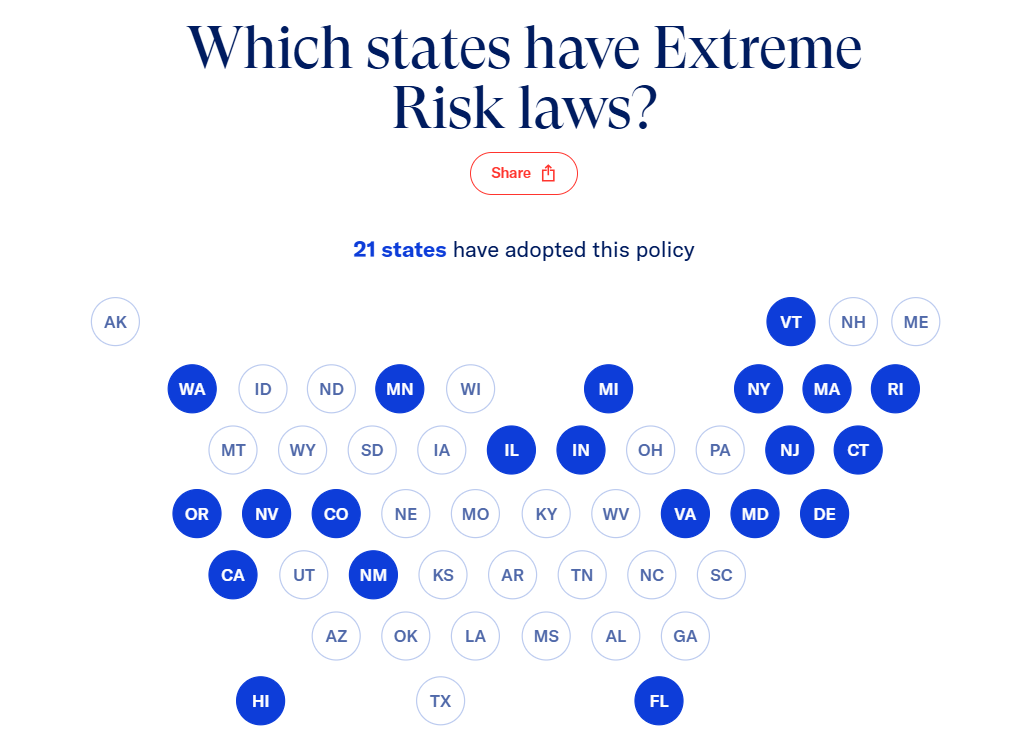
According to the National ERPO Resource Center, a project of the Center for Gun Violence Solutions, “ERPO laws are based on domestic violence protection order laws, which have been in place in all 50 states for decades and are a well-established tool for protecting people experiencing intimate partner violence.” As of April 2025, 21 states, the District of Columbia, and the U.S. Virgin Islands have enacted ERPO laws. States range from Florida and Indiana to Minnesota, New Jersey, and California.
Do ERPO laws work?
It is hard to amass concrete, scientific evidence because we can’t predict what would have happened if a person at risk had not been disarmed during a period of crisis. But when comparing credible threats to violent outcomes, they appear to make a meaningful difference.
Some states, such as Connecticut, have had ERPO laws for decades; however, many of the red flag laws are relatively new. It takes time to spread public awareness about their existence and train law enforcement on how to use them effectively and appropriately. Thus, there is insufficient evidence in most states to provide irrefutable proof of their specific effectiveness.
It’s worth noting, though, that these laws often operate in tandem with laws around prevention from abuse orders and domestic violence protections, which have been in existence long enough to confirm that they do reduce the harm from credible threats and dangerous behavior. In short, there’s good reason to believe they work.
Is mental health the problem?
Guns don’t walk around and kill people without a human finger to pull the trigger, at least for now (looking at you, AI 🧐). But easy access to guns makes impulsive, regrettable decisions like suicide and mass shootings (often but not always triggered by mental health struggles) far more lethal.
According to the Mental Health Alliance, “A suicide attempt with a firearm results in death nearly 85 percent of the time, but more common means of attempting suicide—drug overdose and cutting—result in death less than 3 percent of the time.” Gun accessibility makes suicide attempts exponentially more fatal.
Moreover, Williams claims to be an advocate for veterans. 3/4 of suicides among veterans involve firearms, so ERPOs are likely to disproportionately benefit veterans and their families.
Mental health alone is NOT the problem. Mental health organizations support this conclusion, and it is clear when we compare data for gun deaths along with mental health information in the United States to gun deaths elsewhere. There is absolutely no correlation across national borders between mental health and gun violence, making gun violence a uniquely American problem.
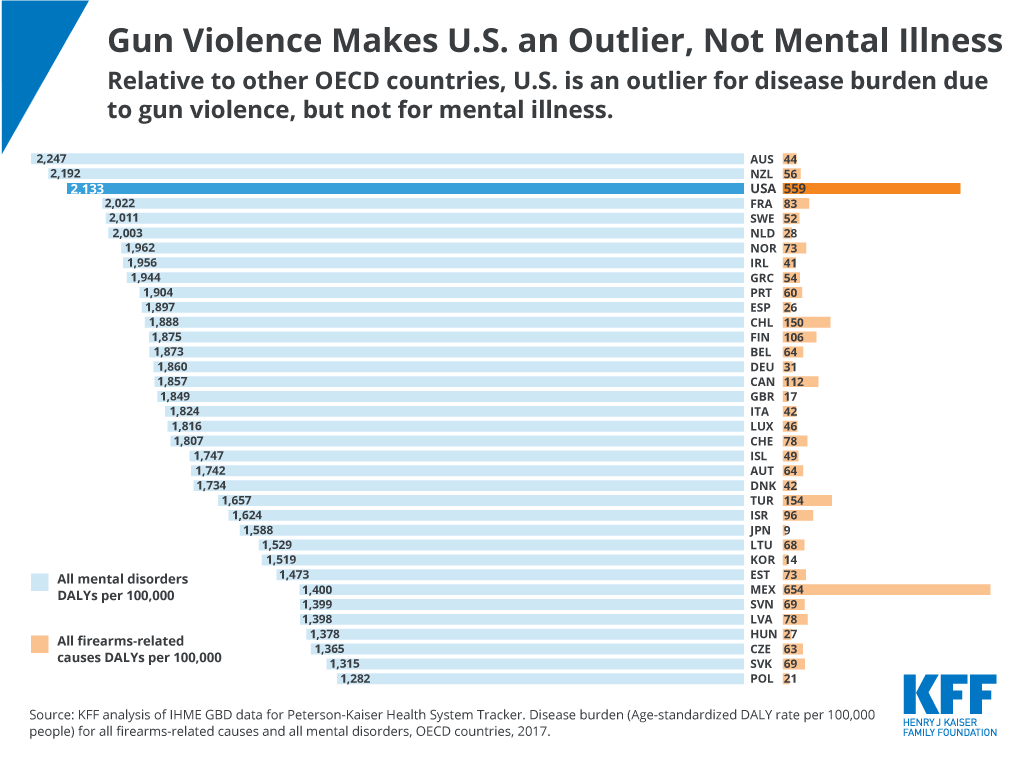
Note: This chart is from KFF from 2019. KFF is a non-partisan, independent organization that combines substantial capabilities in policy research, polling, and journalism on national health issues. To validate their non-partisan nature, check out their list of major funding sources (because… remember, we always follow the money 💸). It’s a broad array of organizations that don’t have any clear partisan leanings.
Don’t let Mexico fool you
Worth noting, Mexico is the only country on the chart with high rates of gun death comparable to those in the United States. But understand that those guns are mostly from the United States. According to the US Government (in 2023, before our current administration decided scientific data was “out” and pseudoscience was “in”), 65%-70% of guns in Mexico came across the border from the United States. We’re exporting gun deaths to Mexico; probably not something to celebrate.
Non-partisan mental health associations support ERPO laws
Mental health organizations like the Mental Health Alliance and National Alliance on Mental Illness (NAMI) are clear that mental health should not be deemed the underlying cause of gun violence. Only a tiny fraction of individuals with mental health conditions perpetrate violent crime with guns.
However, they support well-drafted ERPO (red flag) laws that are time-limited and provide due process. As advocates of protecting the rights of people who struggle with mental health challenges and also have no allegiance to or against gun lobbyists, the perspective of mental health advocacy organizations feels particularly relevant.
According to the Mental Health Alliance, “Modeled on domestic violence restraining order laws, ERPO’s avoid stigmatizing persons with mental illnesses because they are not focused on mental illness but on the risk of gun violence.” NAMI continues that it “supports Extreme Risk Protection Orders (ERPOs) that focus on specific, current behaviors and evidence-based risk factors for violence.”
Pennsylvania’s proposed legislation met all of these criteria. You can read the full text of the bill on the PA State government site if you’re inclined. Refer to page 9, starting on Line 13, in the section titled “Factors” for a list of specific behaviors or events that could serve as grounds for the issuance of an ERPO. These factors must be considered as “evidence of risk” as defined by the bill.
Did the bill pass?
No. It lost by one vote. ONE VOTE!
I can only imagine the heartbreak Rep. O’Mara felt after the bill she introduced in her father’s honor failed to pass by just one vote.
How did our Representative, Craig Williams, vote?
He voted against it. Craig Williams could have been the deciding vote to allow the bill to pass the PA House of Representatives and move on to the PA Senate. He chose not to support it.
It’s not even “bold” to vote for something so many Americans of all stripes support. 88% of Americans (88% of Republicans, 89% of Democrats) support common-sense gun laws related to mental health risks, according to research from the Pew Research Center. We can barely agree on anything at 88% and 89%?! 🫶🏻 But this is a rare example.
Chadds Ford Township is a very “purple” township, as is District 160, the district Craig Williams represents. It’s reasonable to assume that his constituency is well-represented by the Pew Research Center data. Instead of voting with what the data show Americans support, he voted with the gun lobbies. I guess so we can buy more guns?
Should we round up all the guns?
That’s not the answer. I have plenty of friends who own guns. No one worth their salt in this country is suggesting the government run around and round up everyone’s guns (even if people in other countries think we’re nuts for not doing so).
Friggin’ Kamala Harris is a gun owner. In her recent book, 107 Days, she said,
“I got some disapproval for saying that if somebody breaks into my house, they’ll get shot. But it’s the truth. I’ve never made a big deal of being a gun owner, but I have a reason to have a handgun. I store it securely. And I know how to use it.”
(Yes. 🤓 I pre-ordered her book, read it in 2 days, and really liked it. The early press reviews are 👎🏼because they’re written to stir up controversy. Go figure. But let’s talk if that little reading nugget is up your alley. 📚 If not, that’s fine too. You can appreciate her book regardless of whether you agree with all of her political views.)
Back to the guns.
Guns (and the fingers that pull their triggers) are the number one killer of our children. They win the gold medal for stealing precious lives from our communities. Suicide attempts with guns are exponentially more fatal than those via other methods.
Easy access to guns makes impulsive choices far more dire. Common-sense gun regulations, like red flag laws, give family and community members more time to intervene and de-escalate crises before guns turn those challenging situations into unfixable horror stories.
Americans largely agree on common-sense gun laws, especially red flag laws. Craig Williams could have been the deciding vote to push this bill to the Senate. He chose guns instead.
Are red flag laws constitutional?
I’m so sick of the argument that any individual right enumerated in the Constitution is absolute without context. This is asinine.
Every single individual right clashes, in some way, with public good and public safety. There will always, always, always be a need for reasonable guardrails to protect both personal rights and public well-being.
📢 Let me repeat that for the people in the back. No individual right is absolute without regard for the public good.
I’m not a legal expert. I don’t even play one on TV. I’m a regular citizen with a soul, a brain, and an average amount of common sense. It doesn’t take a legal degree to understand this.
We can argue until we are blue in the face 😨 about the correct level of restrictions on individuals around any enumerated right (free speech, gun ownership, freedom to protest, right to vote, etc) to protect the public. These are debates that have raged on since before the Constitution was friggin’ signed!
These discussions will continue as long as we remain a constitutional republic (fingers crossed on that, as some of our Project 2025 friends in Washington are doing their best to end that 250-year reign). I digress…
Even if we just consider the Second Amendment, the norms and Supreme Court precedents we have around individual gun ownership have shifted substantially over the last 250 years. It’s only recently that the prevalence of individual gun rights became mainstream. For most of American history, gun rights and gun control went hand in hand.
The Second Amendment says:
“A well-regulated Militia, being necessary to the security of a free State, the right of the people to keep and bear Arms, shall not be infringed.”
That’s it. That’s the whole darn thing.
It doesn’t say:
“Every person can own every gun ever manufactured or created with the 3D printer in the MakerSpace at the public library, and you don’t have to tell anyone about it. #blessedwithguns 🔫 ”
So consider:
What does ‘well-regulated’ mean? Indeed, it sounds like there’s space for some regulation.
What does “Militia” mean? Is everyone part of the militia? And when our military operations include drones, tanks, fighter jets, nuclear weapons, bioweapons, and cyber attacks, does owning a gun even mean anything in relation to protecting oneself from government overreach? Is a “Militia bearing Arms” even relevant anymore?
What does “Arms” mean? In 1776, it surely didn’t include today’s military-grade assault weapons or ghost guns printed from rolls of plastic filament you could buy online from Etsy.
What does “infringed” mean? Who the heck knows??? For prisoners? Kindergartens in classrooms? Hannibal Lecter? I bet we can all think of someone who probably shouldn’t carry around assault-style weapons in their backpack on an average Tuesday.
I don’t have the answers. But my point is that it isn’t cut and dry. The notion that the Second Amendment leaves no room for reasonable measures to protect public safety is absurd. Let’s stop pretending common-sense gun laws are broadly unconstitutional, especially because for most of American history, they’ve been common.
Red flag laws make sense. They reduce the likelihood that someone in a state of crisis will use a readily available weapon and act impulsively without recourse. They carry no criminal consequences (unless protection orders are violated), and they are temporary in nature. When 6 out of 10 gun deaths in the United States are suicides, red flag laws protect gun owners and their families more than anyone else.
Our representative, Craig Williams, voted against this.
Let’s consider some comparable examples
Our Constitution includes lots of other individual rights. Shocking, I know. 🤯 Let’s consider how individual rights are weighed against the public good in different areas.
Voting Rights
The Constitution provides that citizens have the right to vote. Yet we have all sorts of laws surrounding voter registration and elections to protect the public good, even if they infringe on the ease with which citizens can exercise their right to vote.
Our friends who think the Second Amendment is absolute have no problem implementing barriers, regulations, and restrictions that make it next to impossible for certain people in this country to cast their ballot.
In some states, it’s illegal to give water to people waiting in line to vote. Really?! Can you imagine the mutiny around a law that prevented someone from providing water to a person waiting in line to buy a gun?
Free Speech
Before we even arrive at the Second Amendment, the First Amendment says:
“Congress shall make no law respecting an establishment of religion, or prohibiting the free exercise thereof; or abridging the freedom of speech, or of the press; or the right of the people peaceably to assemble, and to petition the Government for a redress of grievances.”
No law abridging the freedom of speech, you say? Do we also think this is an absolute right? I don’t. And neither does Craig Williams.
Just last week, Williams announced he planned to introduce a bill to criminalize “swatting,” which is when someone makes a prank call to emergency services to cause a large number of armed police officers to show up to a particular address.
“Swatting is not a prank. It is a violent threat disguised as a mere phone call,” said Williams. “When someone falsely reports an emergency to provoke a heavily armed police response, they intentionally risk lives of everyone targeted at the location and law enforcement.”
Swatting is an expression of free speech. That’s it. It’s a “mere phone call” after all. Yet because it’s dangerous to the public welfare, Williams thinks we should have regulations and criminal convictions around it. I’m hard-pressed to believe there’s a single heartfelt human who thinks swatting deserves absolute protection under the First Amendment as an expression of free speech.
📢 Let’s say it one more time. No individual right is absolute without regard for the public good.
Vehicles as an analogy and cultural conversation piece
We don’t even need to imagine what common-sense gun laws might look like or how they might operate in our country. We already have a precedent for reasonable safety regulations around a dangerous tool that’s also valuable in our communities: vehicles. Even Charlie Kirk agreed that vehicles are a reasonable analogy for guns.
So, why don’t more people discuss this precedent? For cars and driving, we have rules around:
age requirements
road rules testing
license registration
insurance requirements
vision tests
safety and inspection tests
safety standards for vehicles
speed limits and safe driving laws
fines, fees, and imprisonment if you break the rules
legal permissibility to lose your license for cause
DUI laws
seat belt laws
curfews for young drivers
That list is far from exhaustive. All of those things make us feel safer. Of course, there’s no constitutional amendment about the right to own cars because cars didn’t exist in the 1770s. That’s beside the point. We’re trying to imagine what life might be like when the government creates reasonable safety regulations around a valued facet of our society that also poses an immense risk to the public.
We don’t have to imagine it. We live with it every day and appreciate the guardrails it provides for our communities. Reasonable vehicle regulations offer the freedom to move around safely in our community.
👮🏻 Do you know how many people in Chadds Ford want more state police to monitor traffic and issue tickets to those who speed on our roads? Basically everyone!! People support simple public safety laws, even if they involve reasonable reductions in individual freedoms.
🚓 I’m sorry, Chad, you can’t drive 95 mph down Route 1. Maybe you missed the enormous sign that says “Speed Limit 45.” That’s there for a reason. 🫶🏻
No one, literally zero healthy-minded people, thinks common-sense regulation about vehicles is an overreaching violation of our right to own a car, drive a car, collect cars, buy cars as gifts, or use a car to flee a tyrannical government.
No rational person is concerned that the government is going to sweep through our communities and take away everyone’s cars by weaponizing the common-sense regulations around vehicle ownership and use.
We already know how this works, and we like it! Speed limits, licensing requirements, pedestrian crosswalks, DUI laws, and more make us feel safer!
If you’re a reader…
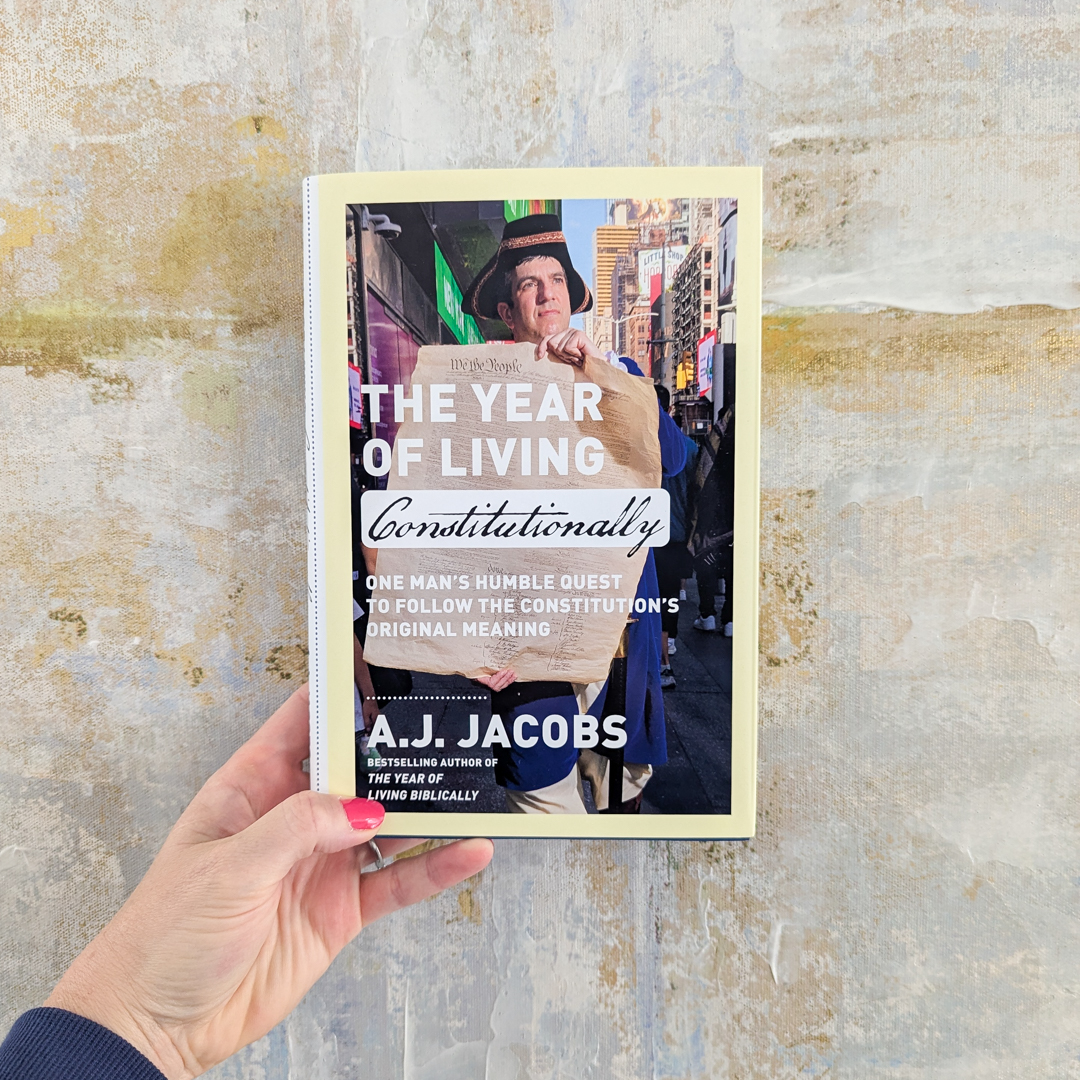
I suggest you read the book “The Year of Living Constitutionally” by A.J. Jacobs. It’s a commentary on his year-long experiment to live by the Constitution’s literal meaning. It’s a great way to learn about the history, context, and content of the Constitution (psst… someone tell the U.S. History teachers about it). 📜
One of the most poignant takeaways from the book is the conclusion he reached that the Founders and authors of the Constitution had such a culturally ingrained sense of personal responsibility to the public good that they never considered writing a Bill of Responsibilities to correspond with their Bill of Rights.
Their writing from that time makes it evident they believed rights paired with responsibilities. Jacobs suggests we might have really benefited from this had they written it in conjunction with the Bill of Rights. I bet he’s right.
Now we’re paying the price for citizens weaponizing a Bill of Rights without considering the implicit responsibilities that come with being part of a civilized society that protects those rights we cherish so deeply.
What to do now?
Craig already cast his vote, so it’s too late to influence him this year, though the legislation may be reintroduced next year. You can contact Craig Williams’ office by phone or email to express your concerns. I wish I could have shared this piece sooner, but I’m just learning as we go along, too. I didn’t know it was coming up for a vote so quickly.
I don’t believe his vote accurately represents the views of his constituency as a whole. I’m sick and tired of legislators voting for their campaign finance interests or their partisan interests over the will of the voters who put them in office.
Going forward
Make a mental note or add it to a running list of how Craig Williams has represented your interests in Harrisburg. He’s up for reelection next November (2026) and running against Elizabeth Moro. It will be a very competitive election and likely decided by a small margin of votes. Your vote will matter; make sure it’s informed and counts.
Do you agree? Disagree?
Share your thoughts. Let’s have a good-faith conversation. If I missed something significant, let me know. This is how we have better conversations, create stronger communities, and choose elected officials that truly represent the will of the people who voted for them.
On this issue, Craig Williams is not meeting the moment.






Wonderful post, Jen. Unfortunately, common sense and rationality are sadly missing in today’s world. I, too, am sick of these legislators not representing the people who elected them. I am just sick ABOUT everything, in fact.
I did speak to him in person about this and wish I could have been as informed or as eloquent as you. He said Republicans have been giving him hell about the vote on background checks. Regarding this “no” I was confused by him saying law enforcement didn’t want it and the situation is covered by already existing laws. Then he kept using the ex of a neighbor who doesn’t like you calling the cops on you to take your guns. Too dangerous for the cops? Then no mention of the required court process. Anyway, I got nowhere. I will say he was quite cordial.