Painter’s Folly could be the crown jewel of Walkable Chadds Ford

This post is part of a series about the past, present, and future of Painter’s Folly in Chadds Ford. The series reflects on local history, how that history influences our community and local culture, and what we can learn about local government from a project of this nature.
I’m going to ask you to use your imagination for a few minutes. Stick with me.
You know the Walkable Chadds Ford project is currently under construction. You’ve seen the massive construction vehicles at the township building, bringing to fruition the ambitious effort.
They’re stitching together Chadds Ford village with trails, pedestrian bridges, boardwalks, and ADA-accessible paths so that people can actually walk between the Brandywine Battlefield, Turner’s Mill, the shops, the restaurants, and the museums without playing a very high-stakes game of Frogger on Route 1. It’s a genuinely exciting project.
The project has been a long time coming. Former Supervisor Frank Murphy once described the vision as being able to “walk from the Brandywine Battlefield to the conservancy, then to Andrew Wyeth’s studio, and basically see 300 years of history on a trail.” That’s a pretty grand vision and a very unique meander through three centuries.
As designed, I hope this project makes Chadds Ford meaningfully more vibrant. But there’s currently a piece missing from the puzzle, and it’s sitting right up on the hill on Route 1, closed to the public, and at risk of being sold off to a private buyer.
The missing piece? Painter’s Folly. 🏛️
If we’re willing to be a little creative, this house — this particular, specific, irreplaceable house — could be the pièce de résistance of the whole Walkable Chadds Ford vision. The cherry on top. The final destination that completes a walking tour that doesn’t exist anywhere else in Pennsylvania.
But only if we don’t sell it first.
What is Walkable Chadds Ford?
The Walkable Chadds Ford project is, at its core, a connector. It’s designed to create a safe, scenic pedestrian route through the heart of Chadds Ford Village, an area currently divided by the heavily traveled Route 1 corridor. The walking paths will allow residents and visitors to comfortably walk between key destinations, including the Brandywine Battlefield, Turner’s Mill Park, and nearby shops, restaurants, and museums.
The path runs from the township building on Ring Road, through the village, past the Brandywine Museum of Art, to Hoffman’s Mill Road. It’s beautiful infrastructure for a beautiful community, and it’s going to change how people experience Chadds Ford, especially visitors who currently arrive by car, park in one spot, and leave without ever really wandering.
But right now, the path stops short of its fullest potential. The project connects the Brandywine Battlefield and Chadds Ford Village historical districts. But the natural endpoint of the walk is not currently open to the public and is in precarious danger of being gone forever.
Something better is possible.
Imagine the walk through Chadds Ford’s history
Start in the 1700’s at the Chadds Ford Historical Society on Creek Road. 🏡
- Stand in front of 18th-century stone houses that bring the Revolutionary War era to life.
- Walk down through the village past the Sanderson Museum, eight rooms packed with Wyeth family sketches, Civil War letters, and 200 years of local lore, all inside Chris Sanderson’s actual farmhouse.
- Grab a coffee or a bite at one of the local spots along the way, like Oso Sweet or Chadds Ford Coffee House, to get a taste of Chadds Ford today.
- Meander through the Walkable Chadds Ford path, across the new pedestrian bridges, through the meadows, enjoying the green spaces Chadds Ford has so passionately preserved.
- Cross over Route 1 to the Brandywine Battlefield, where Americans and British fought in September 1777 on the very ground you’re walking.
For now, the path stops. But imagine it keeps going, just a tiny bit farther. ✨
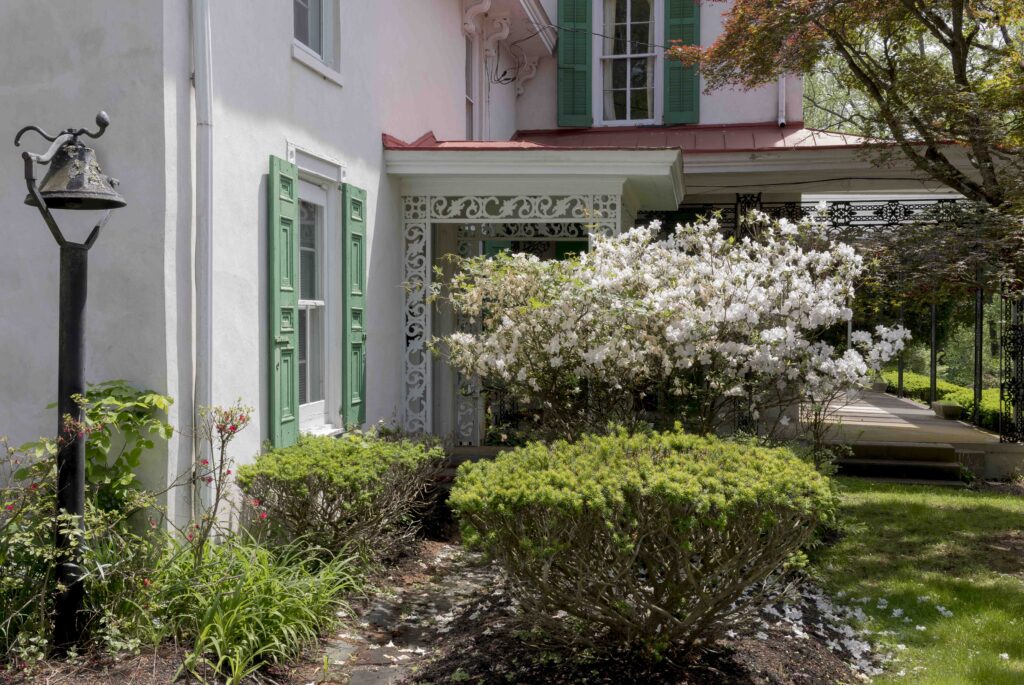
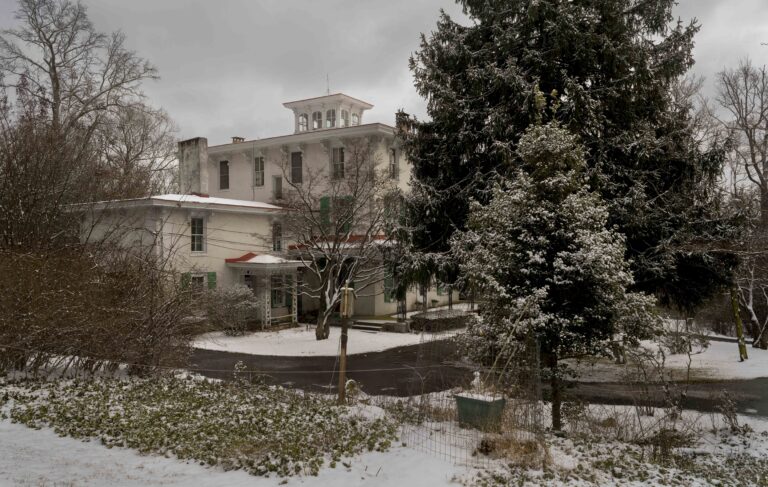
Through the battlefield. Up the hill. To a striking white Italianate mansion with a towering cupola and green shutters, sitting high above Route 1, looking out over the Brandywine Valley. Painter’s Folly.
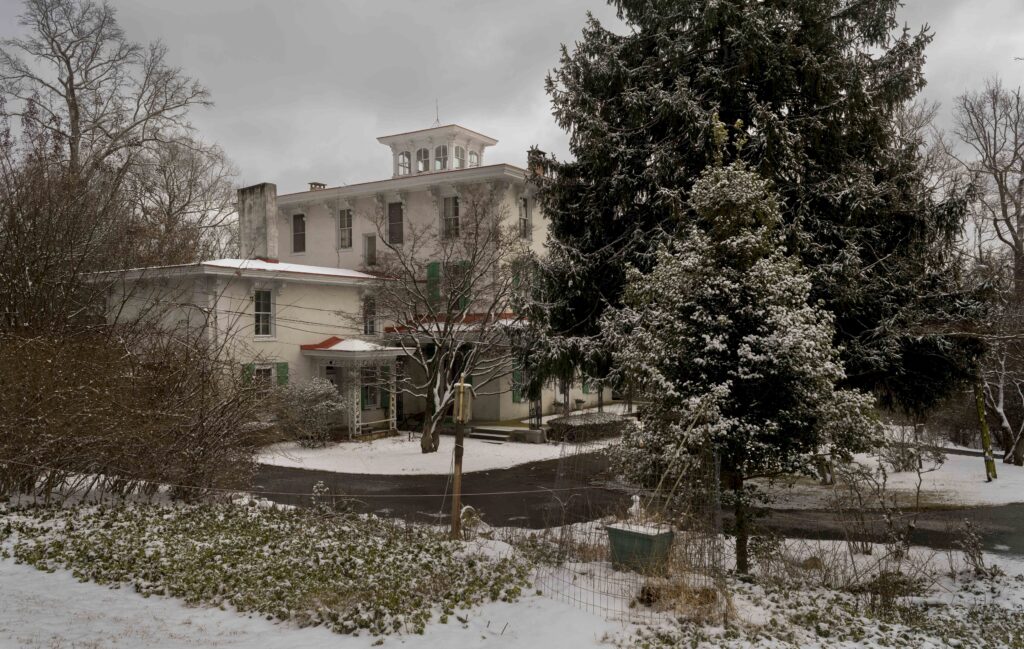
At this home, Howard Pyle taught N.C. Wyeth, Maxfield Parrish, and Jessie Willcox Smith on that same front lawn. The father of American illustration looked out over the same battlefield you just walked through and painted The Nation Makers in 1902. Andrew Wyeth climbed three flights of stairs to his private studio in the early morning hours for twenty years.
With Painter’s Folly at the finish line, that’s not just a nice walk. That’s a world-class walking experience that takes you through 300 years of American history, art, and culture in a single afternoon in a tiny township in Delaware County, Pennsylvania. 🤯
Here’s where it gets really interesting: the logistics actually work
Access is the most obvious problem with Painter’s Folly as a public destination. The current driveway situation off Route 1 feels precarious. Pulling in and out of that driveway with any meaningful visitor traffic is not a great option.
But here’s the thing: if Painter’s Folly is connected to the Brandywine Battlefield — which sits directly adjacent to the property — the Route 1 access problem goes away entirely.
The Brandywine Battlefield already has a parking lot that sits right behind and adjacent to Painter’s Folly. You can see it in the image below from Google Maps. The parking lot in the top left is the battlefield. The red roof is Painter’s Folly.
Visitors could park at the battlefield, walk to the house through the battlefield grounds, and never have to navigate Route 1 at all. It doesn’t take an Evel Knievel leap to see how this is possible!
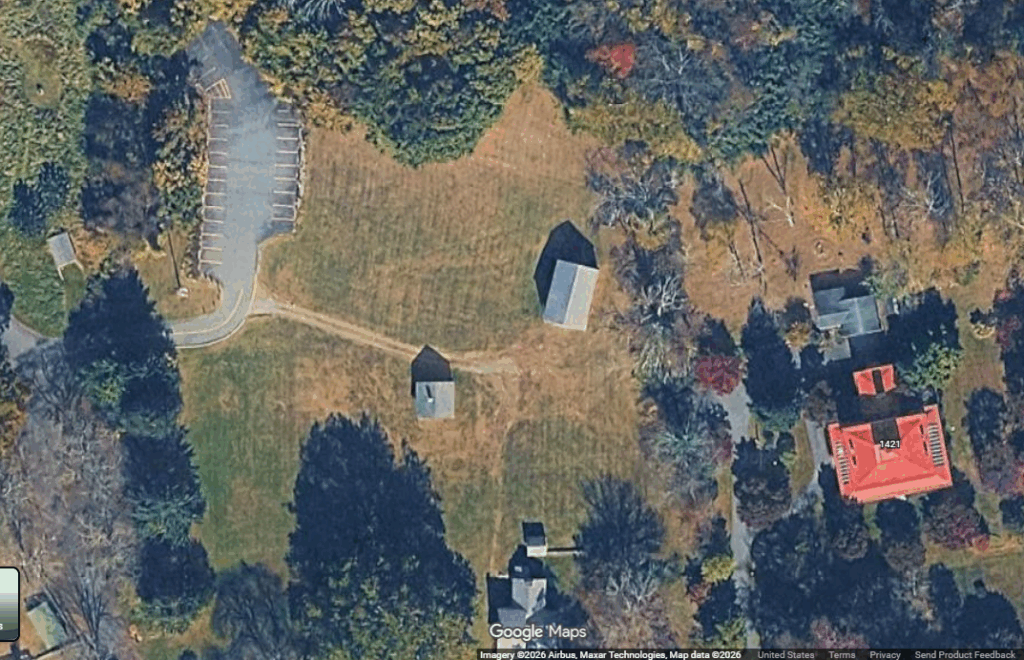
Traffic gets redirected naturally. Parking is already there. The walking connection through the battlefield is the missing link, and it’s not complicated to fix.
This type of partnership requires coordination between the township and the Brandywine Battlefield, but that has happened before. The township previously managed the battlefield in a co-stewardship agreement with the Pennsylvania Historical and Museum Commission for an entire decade, so this is not uncharted territory.
Moreover, we have the perfect person to help us! 👇🏻
The current Chadds Ford Supervisor, Kathleen Goodier, is also the President of the Brandywine Battlefield Park Associates Board of Directors. And she’s on the Brandywine Valley Scenic Byway Commission, which is tasked with (among other things) celebrating the history and culture encompassed within the Byway.
The Byway highlights history from “the settling and early development of the nation through the Revolutionary War, the struggle for freedom on the Underground Railroad, to the creation of world-class cultural institutions by the families who had made the Brandywine Valley their home,” according to the Chadds Ford Township website.
“Creation of world-class cultural institutions by the families who had made the Brandywine Valley their home,” ya don’t say?! That sounds an awful lot like the Wyeths! What a perfect end to Walkable Chadds Ford.
And wait, there’s more! At the last Brandywine Valley Scenic Byway Commission meeting, they were discussing how to highlight local tours (including self-guided ones) along the Byway. Would Walkable Chadds Ford, from the Historical Society to Painter’s Folly, not be a perfect addition to this list?!
With her experience and ties to the relevant organizations, Kathleen, at the center of this, seems to have a perfect confluence of connections, influence, and concern for preserving what makes Chadds Ford so special.
Is it a project that would take a few years to fully come to fruition? Absolutely. Is it worth fully exploring before we hand this property off to a private buyer who will renovate the inside and close the door behind them? Yes. 🙌
This is what “destination” actually looks like
Chadds Ford already has extraordinary things to offer visitors. The Brandywine Museum of Art. The Brandywine Battlefield. The Sanderson Museum. The Historical Society. The Harvey Run Trail. Good restaurants. A winery. Beautiful scenery.
What it doesn’t yet have is a coherent narrative experience that connects all of those things into a single story a visitor can walk through.
Right now, people drive to the museum, the battlefield, the historical society, and the local businesses separately. Each destination is wonderful in isolation. But the power of place is about connection, the feeling that you are moving through a landscape that has meaning, that the things you’re seeing are part of the same story, that this particular piece of ground means something and has always meant something.
The Walkable Chadds Ford project is the infrastructure for that connected experience. Painter’s Folly, preserved and publicly accessible, is the endpoint that gives it a narrative arc.
✨ You begin with the colonial era at the Historical Society. You move through the Revolutionary War on the battlefield. You arrive at the house where the artists came to be inspired by it all, where they created the images that generations of Americans grew up with. Treasure Island. The Nation Makers. Andrew Wyeth’s Chadds Ford.
Start to finish, that is a remarkable walking tour, and we could have it in our backyard. But only if we’re willing to be creative and think a little bigger than the immediate transaction. 🎨
What gets lost if we sell Painter’s Folly?
If Painter’s Folly goes to a private buyer, even one who keeps the front exterior intact thanks to a preservation easement, the interior goes with it. The rooms where Howard Pyle hosted his students on the veranda for what his biographer called “touching, ennobling talks about life and art.” The third-floor studio where Andrew Wyeth worked in the early morning before anyone was up. The cupola. The staircase. All of it becomes someone’s private renovation project.
The chance to connect this property to the walking path, to the battlefield, to the village, is permanently closed. Once it’s privately owned, it’s no longer part of the public story. The thread gets cut.
There are versions of the future of Painter’s Folly that serve the community. There are versions that don’t. Selling it before those possibilities are fully explored isn’t efficiency; it’s just giving up. And there are enough people in this township and this region who believe we’re capable of something better than giving up.
Frank Murphy already evoked the vision
When Frank Murphy said the vision was to “walk from the Brandywine Battlefield to the conservancy, then to Andrew Wyeth’s studio, and basically see 300 years of history on a trail,” Painter’s Folly was part of that big dream. Painter’s Folly is Andrew Wyeth’s studio. It’s not a metaphor. It’s the actual building where he actually worked for twenty years.
Frank Murphy was revered by enough people in this township that the township building’s main room is named after him. I’m kind of surprised we seem to be letting his vision and potential legacy (that makes a lot of sense!) fade away so easily without fully engaging the creative minds and preservation experts to explore all options before settling on a likely public auction.
It’s not too late
The vision is known and possible. The infrastructure is being built. The property that completes it is still, for now, publicly owned.
Now we reflect on whether we’re going to connect those dots or sell the last piece of the puzzle before anyone finishes the picture.
I know which one I’d rather tell my neighbors about in ten years. 🏡✨
Interested in what’s happening with Painter’s Folly? Learn more and sign the preservation petition at paintersfollypreservationalliance.com. You can also follow updates at @paintersfollypresalliance on Instagram.
The Chadds Ford Historical Society, the Brandywine River Museum (Wyeth and local art) are directly dedicated to the type of preservation this article urges. Yet, they’ve shown no interest to buy Painter’s Folly, nor has the Wyeth family. It will be folly indeed for the township to spend further resources repairing and restoring the building. It has already been a useless money pit for township residents. It has distracted township personnel from the core services residents elected them to provide. The township should sell Painter’s Folly to a responsible third party and stop the bleed.
The township should direct its full attention and resources to realistic efforts that benefit residents. Please note that all the other historic buildings mentioned in this article are owned by third parties. Why should the Folly be different?
Non-residents of the township seem to be urging township ownership, but then, they don’t have to pay for it, nor are their government representatives distracted from providing core governmental services. Why should residents’ taxes be raised and other services suffer to satisfy a desire of non-residents? If non-residents wish Painter’s Folly to be restored and maintained, why don’t they buy it? Perhaps then the question of connecting it to walkable Chadds Ford will be timely.
I think we agree on more than some might initially realize. This article is about preserving Painter’s Folly. It doesn’t assume that has to be through township ownership. Based on discussions I’ve had, I don’t personally know anyone who thinks township ownership is the best option (though there may be people who believe that). Those who are seeking a preservation option instead of a public auction (at least what I’ve heard so far) are asking for more time to find the right owner. They aren’t asking for the township to own it in perpetuity; they aren’t even asking for money. They’re asking for time and a working relationship with the township to collaborate and find the best future for the building. This article intends to suggest that maybe we don’t have to be in such a rush to sell it if the township is willing to work with the right preservation partners to hand it off more thoughtfully. Moreover, you mention only three entities involved in preservation. That’s a pretty short list. To assume that exploring those three options means ‘no one is interested,’ seems like we left a lot of possibilities on the table. I hope we can rally the community around finding the best future steward to the building, which may take a bit more time than a rush to public auction. I’m hopeful that could be the best long term outcome that’s a win-win for everyone.