Hey Chadds Ford, Meet Vision Zero

A proven framework for increasing safety on our roads being considered by the township
A township meeting rarely goes by without concerns raised about traffic safety in Chadds Ford. Route 1 is a hot mess. Cars race along Oakland Road and Webb Road (among others). Visibility at intersections like Ridge and Ring Rds or Ridge and Heyburn Rds is questionable. New development at Ridge Rd and 202 threatens to turn Ridge, Heyburn, and Ring Rds into busy streets despite seemingly insufficient infrastructure and design to handle such volume.
Road safety is a genuine concern for Chadds Ford residents. Delaware County has one solution that I’d love to see Chadds Ford adopt: Vision Zero.
What is Vision Zero?
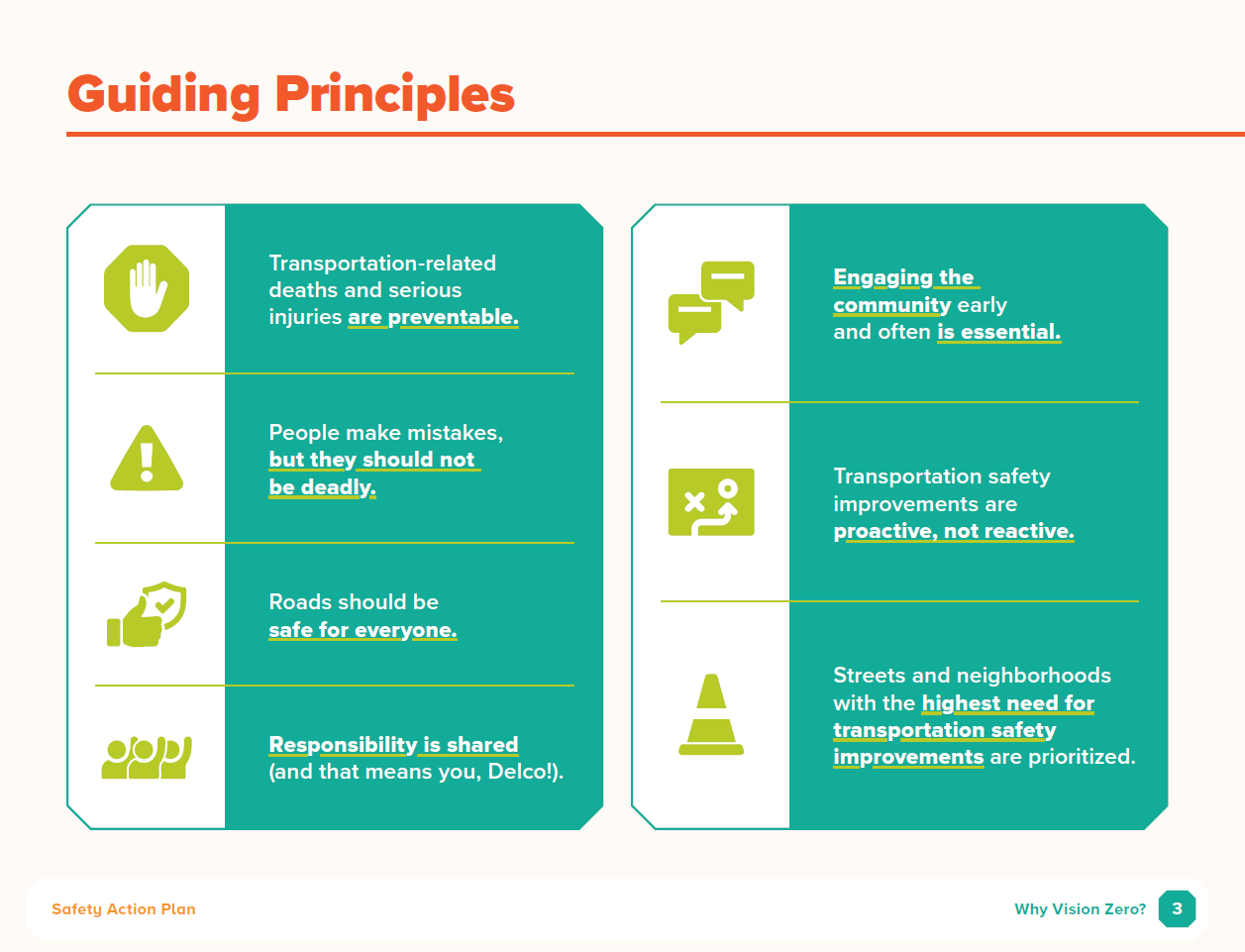
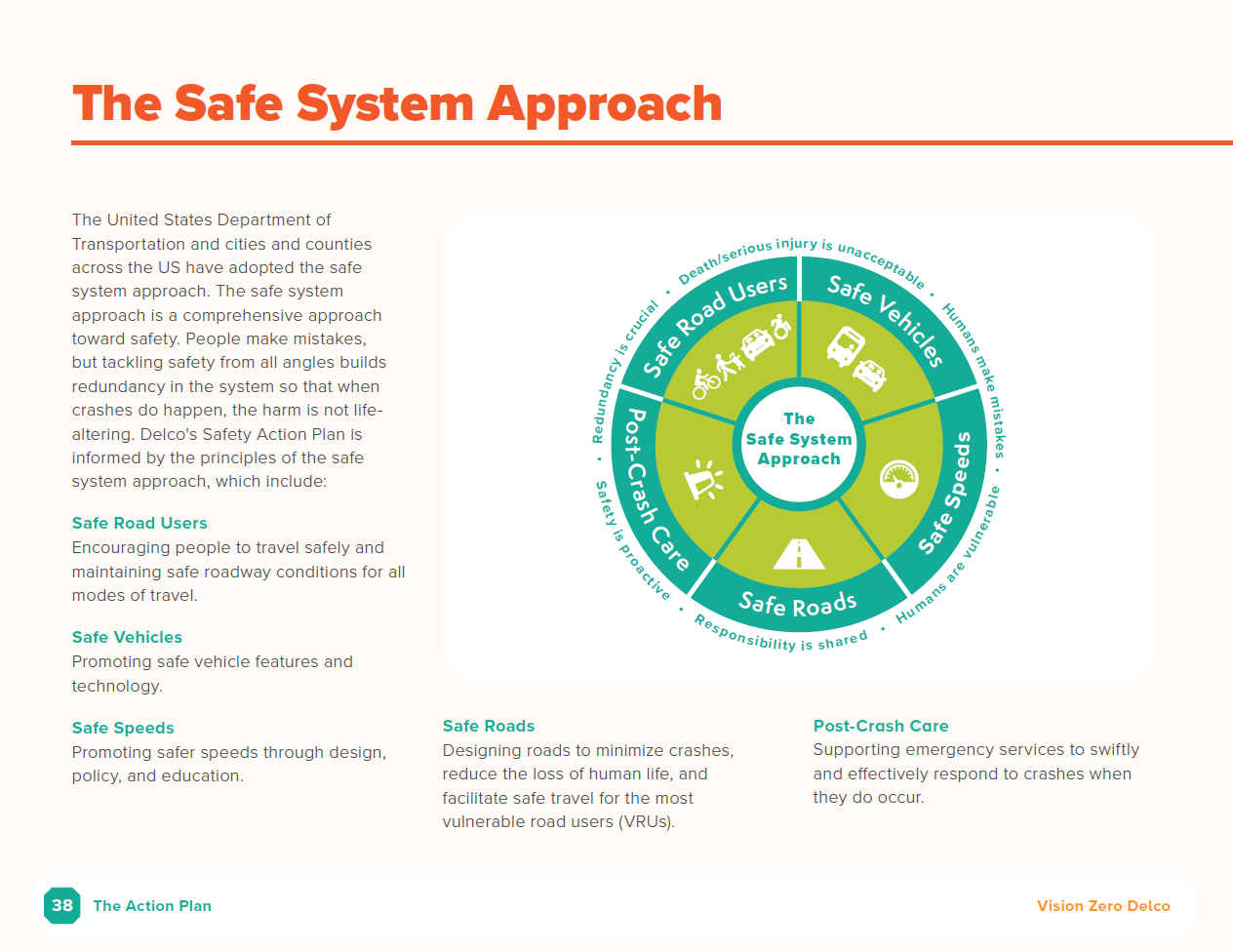
Vision Zero is a proactive approach to road safety that recognizes traffic deaths and severe injuries are preventable, not inevitable. This transportation design strategy and framework seeks to eliminate all traffic fatalities and severe injuries, while increasing safe, healthy, equitable mobility for all.
First implemented in Sweden in the 1990s, Vision Zero has proven successful across Europe and is gaining momentum in many American cities. Hoboken, New Jersey, attributes seven consecutive years without a traffic death to its commitment to Vision Zero. Since adopting Vision Zero, the city has seen an “18 percent reduction in injury crashes, and a 62 percent reduction in serious injuries.”
Closer to home, the intersection of Bethel Rd and Mill Rd was quite dangerous. Since installing a roundabout, a type of traffic calming measure aligned with Vision Zero, the intersection has had no crashes.
Transportation design has traditionally prioritized car throughput while accepting that some fatalities are inevitable to maximize efficiency. Vision Zero flips the script. The framework takes a human-centric approach to planning over a vehicle-centric approach and includes goals like:
speed reduction and traffic calming through roadway design, signage, and monitoring
enhanced infrastructure and signage that help keep pedestrians and cyclists safer
better public transportation
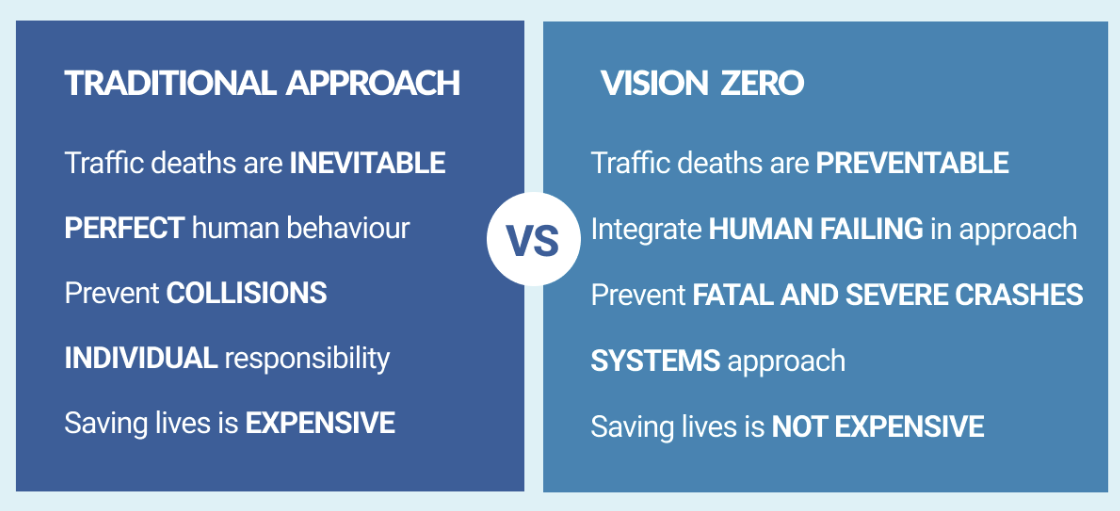
Vision Zero maximizes vehicle throughput only after prioritizing safety. This chart from Vision Zero Network highlights the comparison between traditional and Vision Zero approaches.
Is zero deaths realistic?
It’s unlikely we can design roads to eliminate every traffic death (although some cities are doing it). But we expect zero deaths from air and rail travel. Why would we not expect the same for road travel?
Even if the framework only reduces traffic fatalities and serious injuries, is it a failure or not worthwhile that fewer people die? Surely, there’s success in saving some lives even if we can’t save them all.
Moreover, what is the correct target number of traffic deaths in Chadds Ford if not zero? Are we good with one or two of our neighbors dying in car accidents each year? What do you think the right goal is for your family?
Of course the goal is zero, even if we can’t guarantee perfection. What else could it possibly be?!
Why is Vision Zero being presented at township meetings?
As part of a broader initiative by the Delaware Valley Regional Planning Commission, Delaware County adopted Vision Zero at the county level in February 2025. County leadership is asking all Delco townships to adopt the framework to optimize traffic-safety coordination across the county and maximize access to grant funding for safe transportation infrastructure improvements over time.
Delaware County Infrastructure Planner, Cathy Spahr, is leading the effort to encourage adoption of the framework across the county. She presented the plan to Chadds Ford leadership earlier in 2025. Spahr shared the presentation with me. There are notable parts of the plan that specifically meet our needs. Here are a few goals included in the Action Plan:
Support local jurisdictions seeking to access state, regional, or federal funds for improving roadway safety. (This alone might be reason enough to adopt the plan.)
Incorporate Corridors of Concern and Crash Profiles into existing plan, project, and design review processes to proactively improve these corridors as opportunities arise during private development and public investments. (This is precisely the type of collaboration that might help advocacy related to the Ridge Rd shopping center.)
Partner with police departments to refocus policing on the most dangerous behaviors, less on non-moving violations (This sounds a lot like more state police monitoring speed on Route 1).
Create a Corridors of Concern (CoC) Response Plan in partnership with the relevant local jurisdiction and PennDOT. This plan will identify the next step for each CoC roadway segment to improve roadway safety.
Pilot red light cameras in select jurisdictions.
Coordinate with elected officials on increasing access to red light cameras, automated speed enforcement, and other enforcement options.
Vision Zero has been a topic of discussion at a few public Board of Supervisors and Planning Committee meetings to date. It will be on the agenda again tonight. Some members of the township leadership appear interested in adoption. Others, however, have expressed concern, suggesting it does not apply to Chadds Ford.
Vision Zero encompasses safety guidance around all forms of transportation, from cars and bicycles to pedestrians and public transit. Implementation of the framework is unique to each community, so it won’t look the same in Chadds Ford as it does in Media, Upper Darby, or Hoboken. But considering we have the highest crash rate per capita in Delaware County and consistent concerns about safe roads in our township, Vision Zero is highly applicable to our community.
How does it benefit Chadds Ford township?
Let me count the ways, friends!
Saves lives
First and foremost, Vision Zero is saving lives in cities and towns across the globe. That is a very compelling starting point.
Engaged party in a collaborative road safety coalition
Broadly, elements of the Vision Zero framework closely align with the traffic priorities popping up in public meetings and community groups every day. Speed management and safer street designs, especially in conjunction with new development, plug right into our current community concerns.
Adopting in partnership with the county puts Chadds Ford in the county’s good graces when they’re looking to address specific points in their Action Plan (e.g., more frequent speed monitoring, assistance with grant funding, etc.). The county can be in our corner and help advocate for our needs where they align with the Vision Zero framework.
Increase access to grant funding
Adoption of Vision Zero signals to outside entities Chadds Ford’s heightened commitment to transportation safety using the most innovative, up-to-date solutions. It’s a favorable consideration in transportation infrastructure grant applications.
The township has already discussed funding for speed management projects on Oakland Road. Many residents complain about speeding on Webb, Ring, Ridge, Heyburn, and other roads in our community that may benefit from traffic-calming measures.
Leverage with outside organizations to prioritize transportation safety
Vision Zero is also a lever to prioritize road safety in discussions or negotiations with PennDOT, state police, developers, and anyone interested in programs, policies, or investments that impact our transportation infrastructure. Delaware County has already used its Vision Zero adoption in negotiations with PennDOT to modify proposed road development near Riddle Hospital.
Adoption of the Vision Zero framework can support requests for additional traffic monitoring from the state police. As noted above, this is also a priority at the county level.
Most poignantly, Vision Zero adoption provides a springboard for conversations around traffic safety of the new shopping center at Ridge Rd and 202. Related to its design, the November Chadds Ford township newsletter stated that the Board of Supervisors has been advocating for residents by:
“Communicating with Senator John Kane and Representative Craig Williams for legislative support in ensuring safe roadway access.
Writing to PennDOT to request a new Traffic Impact Assessment, oppose the proposed Ridge Road access, and raise safety and emergency-response concerns.”
These are precisely the type of discussions that benefit from Vision Zero adoption as a tangible foundation and framework for advocacy.
So I’m looking at you, Save Ridge Rd group. 😉 Meet Vision Zero. I’d love to see that Ridge Rd entrance to the new shopping center moved to Route 202, or redesigned to heavily discourage left turns out of the shopping center onto Ridge Rd. Vision Zero might offer design ideas and enhance our argument for promoting this change. 🫶🏻
Saving taxpayer dollars through transportation safety improvements
If Vision Zero is as effective in Chadds Ford as it has been in other communities, it could save the township significant costs related to accident management.
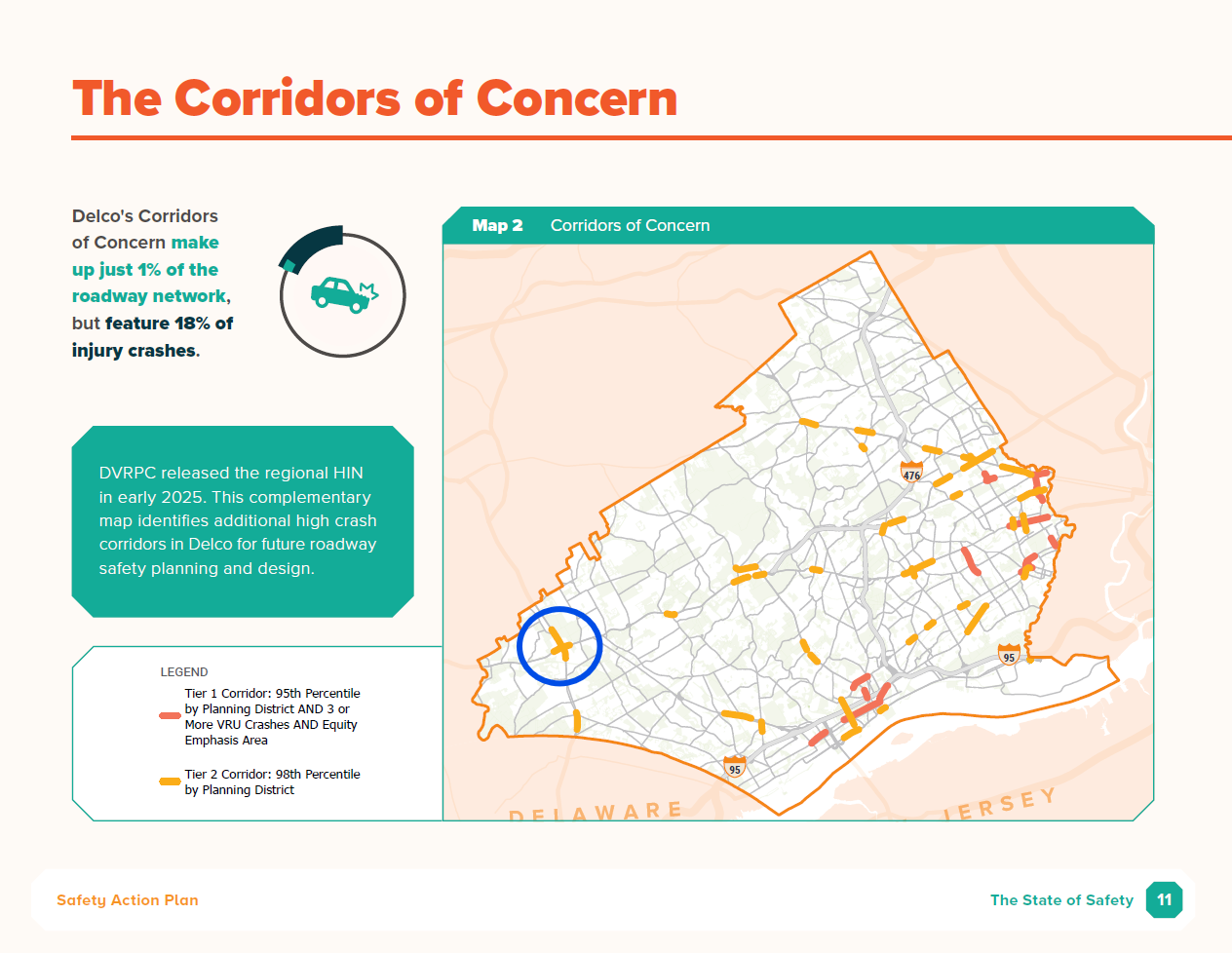
The intersection of Rt 1 and 202 is one of the most dangerous in Delaware County (and most of us have to drive through it almost every day). As residents, we already know this anecdotally. Data from Delaware County road safety analysis confirms that the area around Rt 1 and Rt 202 is one of the county’s Corridors of Concern.
Chadds Ford accounts for 21% of Concordville Fire and Rescue’s expenses, despite representing less than 12% of the population it serves. We have the highest crash rate per capita in Delaware County, and we’re paying for it through (among other things) the Fire Department’s allocation-based funding.
Funding of the Fire Department was a contentious topic at a recent finance committee meeting. That deserves an article of its own. But our large allocation of fire department expenses directly correlates with our dangerous roads.
If we can reduce the extent and severity of traffic accidents on roadways in Chadds Ford, we can decrease our expense allocation from Concordville Fire and Rescue. This could result in significant financial savings for the township while also reducing tragedy.
For the nerdy numbers people in the audience, let me break this down for you. The Fire Dept requested about $253,000 from Chadds Ford this year, based on 21% of its calls for service coming from Chadds Ford. If our call rate reflected our pro rata population, we would account for about 11.5% of the calls, or about $139,000 in expenses.
That’s a difference of $114,000 we’re paying because of the high proportion of accidents on the roads in Chadds Ford. Adopting Vision Zero and applying its framework over time to reduce serious crashes on our roadways could save the township tens of thousands of dollars in fire department expenses each year. This won’t happen overnight, but it’s an example of how Vision Zero can serve the township’s long-term financial sustainability goals while saving taxpayer dollars.
Vision Zero is about more than just cars (and so is Chadds Ford)
While certainly car-centric, Chadds Ford has other modes of transportation worth noting. Vision Zero’s principles for biking, walking, and public transit won’t apply to Chadds Ford in the same way they do in other towns in the county. Still, there is plenty to benefit our local transportation beyond vehicles.
Chadds Ford has hosted two bike races in the last few months, including one that’s part of an international charity series (so this must be a decent place to ride). I see lots of bikes on Creek Rd (in Chadds Ford and Birmingham Townships).
We’re spending over $4 million in grant funding to make our township more walkable through Walkable Chadds Ford. The project’s focus on pedestrians is in the name, for cryin’ out loud. This will be an excellent addition to our community, and a perfect example of Chadds Ford’s transportation priorities extending beyond cars and trucks.
Chadds Ford Elementary has experienced significant difficulty hiring nutrition services employees, in part due to the lack of public transportation, which limits the pool of potential candidates.
Why do we think public transit “doesn’t apply to us”? What does that even mean? Do we only want people in Chadds Ford who can drive here? Investment in public transit in Chadds Ford doesn’t have to mean a SEPTA train station erected over Painter’s Folly.
It could be covered bus shelters at Painters’ Crossing and at the Chadds Ford Village and Barn Shoppes. Bus stops encourage more people to stop in and support our local businesses, and help companies to attract more employees who might need or prefer public transportation.
Our bucolic town roads won’t become a walkable urban center any time soon. But there are lots of opportunities to make Chadds Ford more walkable and safer for everyone on the road, in and out of cars.
The Federal Highway Administration has an entire page dedicated to bike and pedestrian safety measures specific to rural areas. Suggestions include improvements such as lighting, road markings, rumble strips, and curb extensions. These are inexpensive improvements, some costing as little as a few thousand dollars, that make a big difference in safety and walkability in rural areas.
Much of this could apply to us. We will see several of these types of improvements in the Walkable Chadds Ford development upgrades.
Vision Zero applies to Chadds Ford in so many ways!
What will it cost the township?
It costs the township nothing. I confirmed with Spahr that there are no commitments to build new infrastructure or participate in any specific projects as a result of adoption. The township adopts the county’s framework (so it doesn’t need to write its own Action Plan) by passing a resolution, a template for which the county has provided.
After that, it becomes a tool in the township’s arsenal for designing new transportation improvements, advocating for roadway development in our community, seeking funding for safer transportation investments, and collaborating with other organizations (such as the county) to secure support for future projects.
Over the summer, I asked township manager Lacey Faber about the plan, and she said the township already includes most of the framework’s principles in its engineering design practices. This further suggests adoption should have a limited burden on township resources while amplifying our commitment to safety and enhancing our eligibility for grants.
Vision Zero is a slam dunk for our community. We could desperately use more assistance in making our roadways safer. Development in our area is not slowing. Traffic volume is not going down. Vision Zero publicly proclaims to anyone who wants to develop or modify transportation infrastructure in and around Chadds Ford that human-centric, safety-first development is a top priority for our township. That’s a proclamation I can get behind. I hope you agree. 👍🏻
Adoption of the Vision Zero is up for discussion at tonight’s Planning Commission meeting. Let our commission members (and eventually our supervisors) know how you feel about it. Pass along this article if you find it compelling.
I know we all agree that we want safe roads in our community. 💛
Would you consider supporting this work?
The community supports this newsletter. I mostly do the work for free. If you value this newsletter and have the means to support it financially, I’d love for you to become a paid subscriber. If not, that’s ok too. Thanks for considering it! 💛