Have you heard about plug-in solar?

Energy is the hot topic du jour, so how about we dabble in electrons through the lens of life in Chadds Ford. Enjoy this pop-up series, Energy in Chadds Ford, exploring conversations about energy in our neck of the woods.
Want to buy a couple of solar panels at a local hardware store, plug them into the wall like a toaster, and start generating free power from the sun? ☀️
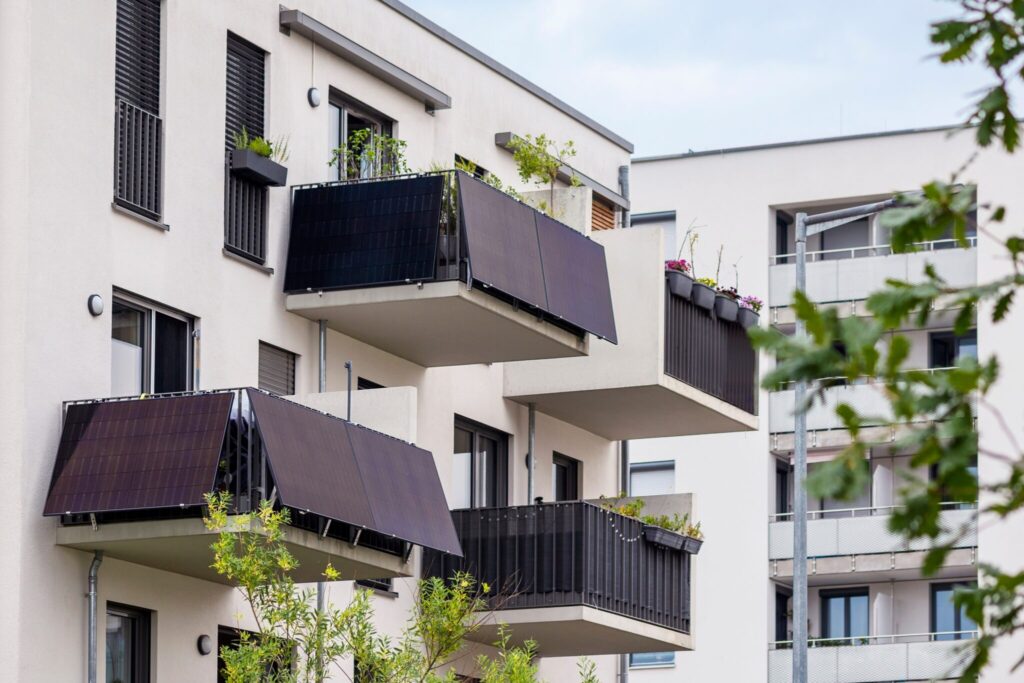
In eight states, you already can! Pretty cool, right? It’s not yet allowed in Pennsylvania, but there’s a bill in Harrisburg to change that. These systems are called plug-in solar (as one might expect). They’re also sometimes called “balcony solar,” because they’re popular to install on apartment and townhome balconies.
While it’s an energy solution, plug-in solar is a property rights question at its core. Why should anyone need permission from a utility, an HOA, or a landlord to plug a certified, safety-tested appliance into the outlet in their own home? Nobody asks permission to plug in a toaster, a space heater, or a window AC unit. No one asks to plug in a diesel generator! A small solar panel energy generator shouldn’t be much different.
Plug-in solar systems aren’t the panacea to our power supply problems, but they are a novel step in the right direction that gives people agency over a small piece of their own electricity consumption. This is a simple, low-drama energy solution that *should* be a slam dunk to pass in our legislative chambers.
With plug-in solar, a lot of “little bits” add up to a lot of new generation. Passing legislation to make this legal costs the government nothing (and we all love a good ‘no tax dollars’ solution). Moreover, it gives homeowners and renters alike a little more control over their own electric bill, and a low-stakes way to dip a toe into solar power without committing to a $10,000+ roof install.
What is plug-in solar?
Let’s back up and introduce these modern marvels of silicone science that turn snacks of solar power into dollops of home power.
A plug-in solar system consists of one to a few solar panels, paired with a small device called a micro-inverter. Some of the panels are so light and flexible you can roll them up like a bathmat.
After hanging the handful of panels on a balcony, patio, deck, or in a yard, plug them straight into a regular wall outlet. No electrician, no permit, no utility interconnection paperwork. Once you plug them in, they quietly start offsetting the power you would otherwise pay PECO to pull from the grid.
The panels typically produce somewhere around 180–1,200 watts of electricity. It’s not enough to run your whole house, but they also aren’t that expensive. They typically pay for themselves in just a few years (pssst… especially if you orient them facing south).
Where is this already happening?
It might sound trite to make a big deal about such small systems. But plug-in solar is already making waves (and lots of electrons) in other countries.
Germans, for example, have been plugging solar panels into their homes for years, and it’s taking their culture by storm. More than a million Balkonkraftwerke (“balcony power plants”) are registered across the country, together producing roughly a gigawatt of power. That’s the output of a small power plant made up almost entirely of ordinary people who:
- Strolled down to whatever a German Home Depot is called,
- Carried a couple of solar panels back to their place, and
- Spent less time than it takes to put together Ikea furniture to create an itty bitty personal power plant on their balcony.
That sounds pretty dope… or “tuff” as the kids these days might say. 💪🏻 In a country obsessed with ‘not treading on me,’ that feels like quite the power ⚡ move if I’ve ever seen one!
Plug-in solar caught on in Germany for the same reason it’s appealing here: renters and apartment dwellers, who make up more than half of Germany’s population, had no path to rooftop solar. Balcony solar unlocked free power for an investment of a few hundred bucks and a couple hours of their time.
Plug-in solar is spreading fast in the U.S. Utah passed the first plug-in solar law in the country in 2025 with unanimous, bipartisan support. It was even introduced by a Republican representative. The blasphemy! Just kidding (not kidding about the Republican sponsor, kidding about the blasphemy). Saving money on our energy bills, pursuing energy independence, and investing in cheap, less-pollutive, clean energy technology are popular regardless of political affiliation. 🙌🏻 Don’t let the fossils tell you otherwise, because they’d be fibbing. Those fibbers… 🤥
Since deep-red Utah unanimously passed its bill to allow plug-in solar, Maine, Virginia, Colorado, Maryland, Connecticut, Vermont, and New Hampshire have all signed similar bills into law. New Jersey’s and New York’s bills have passed and are on the way to their governors’ desks to be signed into law.
More than 30 states have introduced legislation, and the bills are passing so quickly my aforementioned list might be outdated by the time you read this. Wouldn’t that be a failed fact-check to celebrate? 🥳
Plug-in solar is not some fringe idea. It’s a bipartisan, fast-moving trend, and Pennsylvania has a bill (HB 1971) sitting in Harrisburg right now waiting for its turn to unleash more free power from our beloved sun. The bill has bipartisan co-sponsorship, but our House Rep. Craig Williams has not yet signed on. Honestly, friends… I’m not surprised. Maybe he’ll knock my socks off with a co-sponsorship commitment; I hope he does!
Is plug-in solar safe?
Yep! A new safety standard, UL 3700, was developed specifically for plug-in solar equipment and rolled out in early 2026. Bills like Pennsylvania’s require that any plug-in system sold or installed meet that certification. Thus, the legislation makes the whole shebang safer.
Right now, without a law on the books, people can order uncertified panels and inverters online with no way to verify they meet any safety standard. You can order anything on Amazon, right!? 😬
Passing legislation tightens safety by giving people a clear, certified standard to shop by instead of guessing. I don’t know about you, but I do a lot of guessing when I get lost at Lowe’s. This is one thing I’d rather not guess about. 🫠
Good stories travel best from neighbor to neighbor.
If this story matters to you, pass it along. It’s the best way to keep community journalism growing in Chadds Ford. Email or text it to a friend. Share on socials. Spread the word.
What’s the ROI on plug-in solar?
Isn’t that always the question? 😉 The direct financial ROI is modest but meaningful. A typical plug-in solar system costs a few hundred dollars and often pays for itself within a handful of years. Then it just keeps on keepin’ on, giving you free electricity long after it’s earned its keep. If you want to move, toss it in your trunk and hang it at your new place. I bet there’s sun there too! 🌞
A plug-in solar system is not going to replace your electric bill. Craig Williams doesn’t have to worry that our plug-in solar neighbors “won’t pay anything to hook up to the grid.” Phew! 🙃
But plug-in solar offers a way to generate some of your own power, have a bit more agency over your electricity bill, and see exactly what solar can do for you. If you’re a candidate for rooftop solar, you can also get some data to help decide whether you want to eventually invest in a larger rooftop system.
Can it replace a portable generator during an outage?
Power outages are a fact of life living among the trees of Chadds Ford. We’re no strangers to a loud and smelly diesel generator running the fridge through a storm-related outage. Whether or not a plug-in solar panel replaces the diesel generator depends on the details of the system
A standard grid-tied plug-in solar panel — the kind covered by HB 1971 — is built with a required safety feature that automatically shuts it off the moment the grid goes down. This is important. It protects utility workers from a “dead” line accidentally getting energized while they’re repairing it. (My rooftop solar doesn’t work in a power outage either for the same reason.) So on its own, a basic plug-in panel won’t keep your fridge running during a blackout, even in full sun.
A battery-based solar generator paired with your plug-in solar panel, however, could produce electricity in an outage. Because the battery captures all the energy and is already isolated from the grid, it doesn’t need to be shut off for utility lineman safety. (This applies to rooftop solar as well; I could use my rooftop solar in an outage if we hooked up a home battery to the solar system. We just chose not to yet.) The battery-based solar generator is already fully legal in Pennsylvania today.
Who is against this?
Fortunately, not many. Opposition is thin and not partisan:
- Utilities have been the main source of pushback, stating concerns about grid “visibility” (not being able to see or track power flowing back from unregistered panels). Given the limited amount of energy these panels generate relative to a whole home energy load, this risk is minimal. The UL 3700 safety standard should help reduce real risk to utilities as well.
- Some electrical workers’ unions, including the IBEW, have pushed back in a few states. They cite safety concerns, despite bills requiring compliance with UL 3700. Proponents of plug-in solar believe that the fact that plug-in systems don’t require a licensed electrician to install them is the real underlying issue. Generally, IBEW is a proponent of solar because it offers so many opportunities for their members. Personally, I’m unconvinced that we should stifle innovation, energy generation, and property rights in exchange for artificial protection of licensed work. These shouldn’t have any meaningful impact on job security for the industry.
Despite these concerns, researchers have recorded zero safety incidents among more than one million compliant systems installed in Germany. Yep. Zero. In our neck of the woods, neither Pennsylvania’s Public Utility Commission nor PJM, the region’s grid operator, has raised an objection to the bill.
Why does this matter for the grid — not just your own bill?
I alluded to it earlier, but let’s circle back. Plug-in solar is great for individual households, but it’s not just a personal savings play. Many small systems, spread across many homes, can produce a meaningful reduction in everyone’s electricity costs.
- Plug-in solar shaves demand at the times that matter most. Grid costs are driven disproportionately by peak demand — the midday to afternoon hours when everyone’s air conditioning, lights, and appliances run at once. Small solar systems chip away at that “peak” demand, which helps keep the region’s overall capacity costs (the costs that show up on everyone’s bill, solar or not) in check. I wrote at length about how the high “peak” demand in PA (and PJM, our whole grid system) is a huge driver in the skyrocketing electricity costs we’ve seen lately.
- Plug-in solar opens the door to people who are otherwise locked out. Renters, condo owners, and anyone in a multi-family building generally have no way to install rooftop solar. Plug-in solar is the one form of home solar available to them (especially when community solar is not yet legal in PA). More energy generation distributed throughout the grid system is a good thing!
- Plug-in solar costs the government nothing. No subsidies, no tax credits required. The bill cuts utility red tape and eliminates interconnection requirements for small, certified systems.
Plug-in solar in Pennsylvania
House Bill 1971 opens the door for plug-in solar to be legal in Pennsylvania. The bill would:
- eliminate the requirement for a utility interconnection agreement (which can be cumbersome and excessive for such small systems) and
- prohibit electric companies from charging fees on small systems that carry a national safety certification.
It’s currently sitting in the House Energy Committee, waiting on a vote. Ugh… what are they waiting for?! 💤
How can we help move it forward?
Chadds Ford is represented by Sen. John Kane (9th District) and Rep. Craig Williams (160th District). If you’d like Pennsylvania to join the growing list of states making this legal, let them know HB 1971 matters to you.
Senator Kane can’t do much about it until the bill gets through the House (though he could sponsor a similar bill in the Senate).
Rep. Williams is on the House Energy Committee, where the bill currently resides. He has direct influence over moving the bill out of committee and to the whole House for a vote. If you think we should be able to install plug-in solar panels in a regular ol’ outlet in our home, let him know you’d like to see this bill passed.
Contact info:
- Sen. John Kane: 610-510-8252 · [email protected]
- Rep. Craig Williams: 610-358-5925 · [email protected]
Don’t live in Chadds Ford, or not sure who represents you? Find your PA state senator and representative here by entering your address.
A quick template you can copy, paste, and personalize:
Hi [Senator Kane / Representative Williams], I’m a constituent in [your town]. I’m writing to ask you to support HB 1971, the plug-in solar bill. Eight other states have already made this simple, no-cost change with strong bipartisan support, and Pennsylvania shouldn’t be left behind. Please help move this bill forward.
A short call or email goes a long way. Legislators track how many constituents reach out on a given bill. It might not take that many calls to get this bill, with no fiscal cost and bipartisan support, across the finish line.
Once Pennsylvania passes the law, how do you get the panels?
When plug-in solar becomes legal here, the easiest on-ramp will likely be Bright Saver, a nonprofit that advocates for and supplies plug-in solar panels in the U.S. At the time of publishing, Bright Saver sells its panel kits at cost through a $29/year membership, which unlocks wholesale-style pricing (roughly $285 for a 180-watt kit or $415 for a 360-watt kit, versus several hundred dollars more at retail).
As a 501(c)(3), Bright Saver has no shareholders and no markup on the hardware. The membership fee funds the nonprofit’s advocacy and support work, not the panels themselves. Their site walks through how the systems work, what you can expect to save, and how to size a kit for your space.
What do you think? Would you invest in plug-in solar?
This isn’t going to solve our energy prices on its own. But it’s a simple, low-cost piece of the puzzle. We need so much new energy supply; I think we should be open to paths for private investment in all the clean energy technology available.
As other states push this legislation through around the country, I’d love to see Pennsylvania follow suit. What do you think? What did I miss? Could you use plug-in solar at your place?