Meet the neighbors making sure we don’t forget Painter’s Folly

This post is part of a series about the past, present, and future of Painter’s Folly in Chadds Ford. The series reflects on local history, how that history influences our community and local culture, and what we can learn about local government from a project of this nature.
You know the saying: if you want something done right, do it yourself.
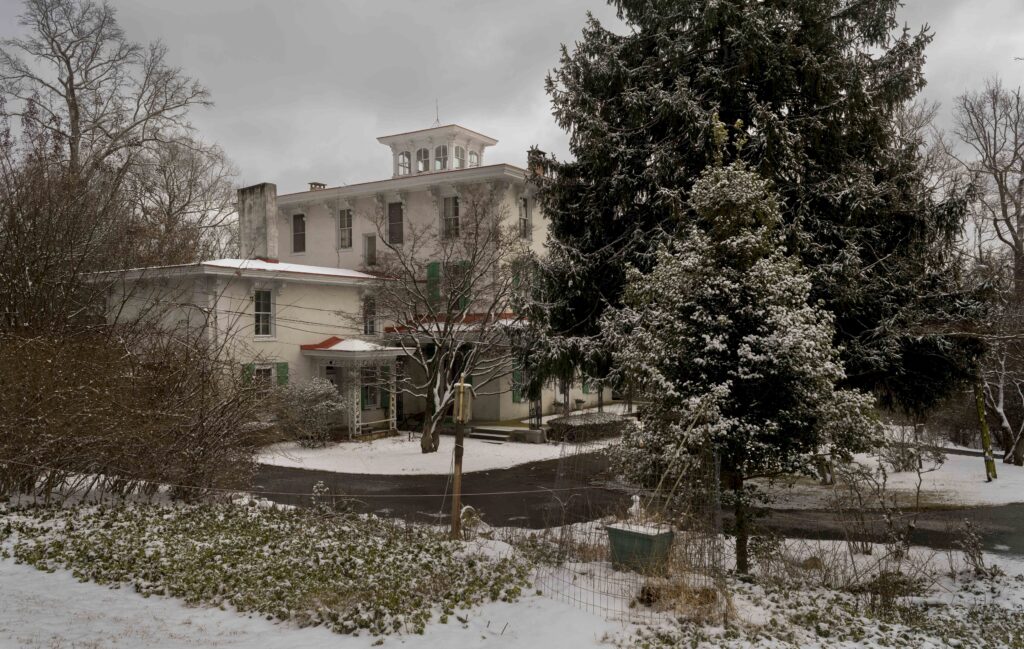
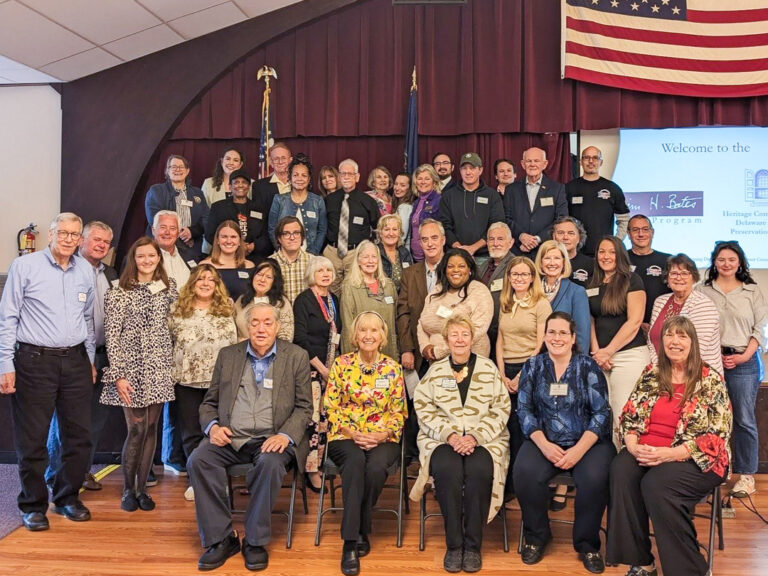
Well… that’s basically the origin story of the Painter’s Folly Preservation Alliance. In 2025, a group of Chadds Ford residents, led by Ed Worteck, a Professor Emeritus of Art and Art History, alongside neighbors Emma Leuschner, Pam Rizzo, and others, spent considerable time and energy trying to work with the township on the future of Painter’s Folly, that striking white Italianate mansion sitting up on the hill along Route 1.
They showed up at township meetings, and Ed was appointed as the township’s liaison for Painter’s Folly. They raised ideas about possible futures for the historic home. They brought connections to prestigious preservation organizations in the city and region.
But after a while, it became pretty clear that the township wasn’t particularly interested in having that conversation. (More on the whole saga another day.) The township said it wanted to control the process and narrative around Painter’s Folly and didn’t like the ideas preservation advocates offered.
Pssttt… there’s been a bit of press around the future of Painter’s Folly. So much for controlling the narrative. 🤷🏻♀️ Trying to control any narrative in this day and age with social media and all the things feels like a fool’s errand.
Instead of throwing up their hands, our dedicated neighbors sprang up the Painter’s Folly Preservation Alliance and got to work.
What this group of scrappy, very experienced preservation experts has accomplished on their own time and with their own resources since forming the Alliance is genuinely impressive. Here’s a look at who they are and what they’ve been up to. 👇
First, a quick “why should I care” refresher
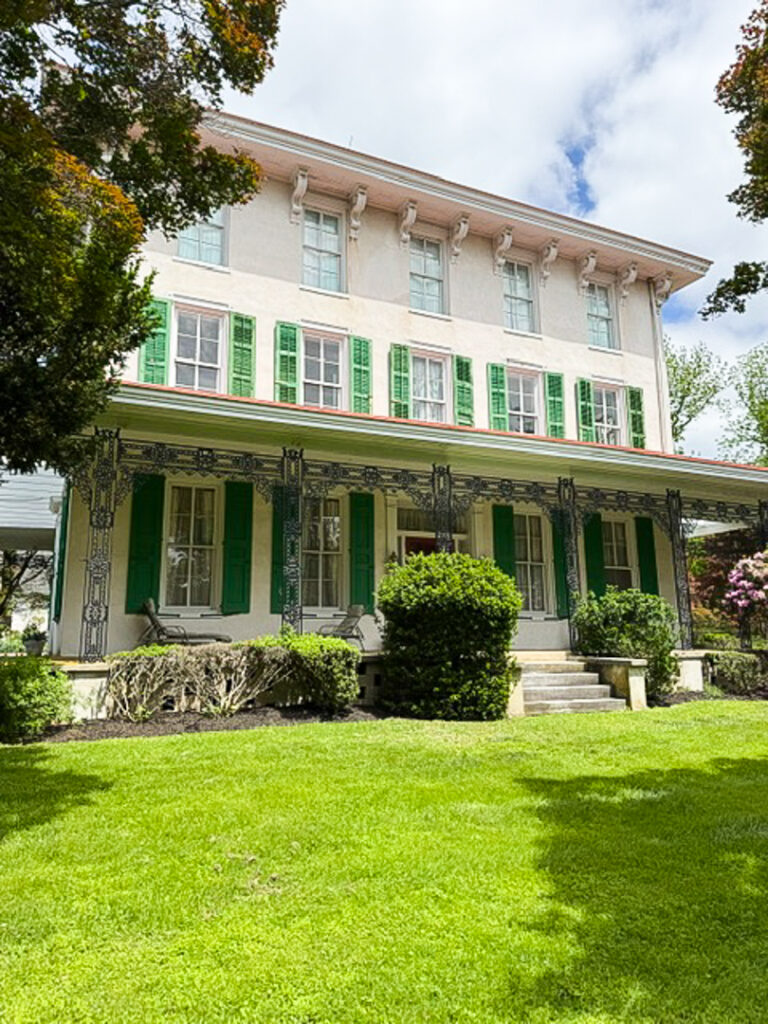
Painter’s Folly isn’t just an old house. It’s a c. 1856-1857 Italianate mansion that is listed on the National Register of Historic Places, sits within both the Chadds Ford Historic District and the Brandywine Battlefield Historic District, and has connections to American art history that would make your jaw drop.
The short version: Howard Pyle, considered the father of American illustration, ran a competitive summer art school out of Painter’s Folly from 1898 to 1903. His students included Clifford Ashley, Betha Corson Day, Frank Schoonover, and a then-20-year-old named Newell Convers Wyeth, who you may know better as N.C. Wyeth. (Yes, that Wyeth family. They’re a BFD around here.) Beginning in 1989, Andrew Wyeth used Painter’s Folly as a private studio and refuge for twenty years, painting the house and its inhabitants in some of his most personal and intimate works.
This is not a random old building. This is a place where American art actually happened. Purchased using public tax dollars, it temporarily served as artists’ studios. Right now, it’s closed to the public and at risk of being sold at auction to a private buyer.
Enter: the Alliance. 💪
What the Alliance has done since forming
They wrote the history (for real and with footnotes 📄)
As a first step, the Alliance commissioned a thorough, well-researched narrative history of Painter’s Folly. Written by Emma Leuschner, the resulting piece is a deeply researched, 35-minute read that traces the house from its origins in the 1850s to the present day.
It’s full of incredible stories that most Chadds Ford residents have never heard:
- the disowned Quaker farmer who built it
- the suffragette who owned it and founded one of the first women’s clubs in the country
- the French Ambassador, who was hosted there on Brandywine Day
- the dairy operation run by a man who helped found Linvilla Orchards, and
- Andrew Wyeth’s decades of early morning visits through the Sipalas’ unlocked door.
The history of this house is legitimately wild. 🤯
This kind of documentation doesn’t happen unless someone decides it’s worth the effort.
They recorded Helen Sipala’s oral history before it was too late
Helen Sipala is now 91 years old. She and her late husband, George, owned Painter’s Folly for 44 years, from 1974 to 2018. Helen was Andrew Wyeth’s close friend, model, and confidante for two decades, a relationship she documented in a diary that was later published as a book.
📕 The book is called BEYOND THE MARRIAGE BED My Years as Friend, Model and Confidante of Andrew Wyeth, and you can check it out at the Rachel Kohl Community Library.
The Painter’s Folly Preservation Alliance recognized that Helen’s firsthand memories represent an irreplaceable piece of history. They hired historian Thomas Wood to conduct a formal oral history interview with Helen over three sessions in her home. 🎤 Those recordings are now preserved in perpetuity at the University of Kentucky’s Louie B. Nunn Center of Oral History, a nationally recognized repository for exactly this kind of material. How cool, right?
Whether or not Painter’s Folly is ultimately preserved, Helen’s memories of Andrew Wyeth, the house, and their years together are now on the record. Forever. That matters. 🙏
They documented what’s inside the house
📷 Ed Worteck has spent considerable time photographing both the exterior and interior of Painter’s Folly. He’s documented the architecture, the artifacts, and the details that could easily be lost to renovation or the passage of time. This is the kind of work that preservation professionals call “architectural documentation,” and it’s exactly what you do when a historic property’s future is uncertain.
The rooms that Howard Pyle lectured in. The third-floor studio where Andrew Wyeth worked in the early morning hours before anyone else was up. The cupola. The piazzas. All of it captured before anything changes.
(Worth noting: Worteck was eventually told he was no longer permitted to enter the property to continue this documentation work. The township maintains that the solicitor made this judgment call for safety reasons, though a solicitor only advises, and ultimately the township makes its own decisions. Restricting access in this matter is unusual for a historic structure of this nature, particularly when Worteck and others have offered to sign liability waivers.)
They figured out what the township’s actual options are
Not everyone wants to dig into the Second Class Township Code on a random Tuesday night. I do not. 🫠
Luckily, the Alliance did it for us! ✨ They published a clear breakdown of the legal options Chadds Ford Township has under Pennsylvania law if it decides to dispose of the property, such as sealed bidding, public auction, or conveyance agreements, and many others.
This is the kind of homework that turns vague concerns into an actual policy conversation.
They mapped out how other communities have done this
Delaware County has 18 historic sites that are municipally owned but operated by a separate nonprofit or community partner through a co-stewardship arrangement. Eighteen! The Grange Estate, the Lazaretto, the Willows; these are all examples of a model that works.
The Alliance documented all of them, making the case that Chadds Ford Township doesn’t need to reinvent the wheel. The wheel exists, and it’s spinning nicely 20 minutes down the road. The Alliance connected with the Preservation Alliance of Greater Philadelphia, one of the most respected regional preservation organizations around, which offered its guidance and named Painter’s Folly a “Place to Save” in its Winter 2026 issue of Extant magazine.
They launched a petition and kept the public informed
The Alliance launched a Change.org petition asking the township to slow down, explore its options, and communicate transparently with residents before making any irreversible decisions. The petition outlines a set of reasonable requests: a clear timeline, regular public updates, preservation easements that include the interior, and continued documentation of the building.
The Alliance has also been publishing regular updates on its website tracking what’s happening at township meetings, what decisions have been made, and what questions remain unanswered, essentially doing the civic journalism that keeps residents informed when official channels go quiet.
They got press
Local news cares. Hidden City Philadelphia covered the story in October 2025. The Delaware County Times ran a feature. Extant magazine named it a place to save. The Alliance has been steadily working to ensure this story doesn’t get buried under the weight of bureaucratic inertia. 📰
💭 I’ve been covering it too. Do I get to take credit for that here? 😉
Why this group deserves your attention
The Painter’s Folly Preservation Alliance is not a bunch of people trying to freeze Chadds Ford in amber and make everyone worship old things. They’re residents who looked at a genuinely significant piece of their community’s history, saw it at risk, and decided to do something about it, even when the official channels for doing so were closed off.
They’ve produced a comprehensive narrative history, preserved an irreplaceable oral history, documented the physical building, researched the legal options, mapped the precedents, built professional partnerships, launched a public petition, and kept residents informed through every twist. Maybe the township should take note… just sayin’. 🫶🏻
The Painter’s Folly Preservation Alliance did all of this. On their own. As volunteers. Because they believed it was worth doing.
Whether you care deeply about preservation or just about neighbors who show up for their community, this is a story worth sharing.
You can learn more, read the full history, and sign the petition at paintersfollypreservationalliance.com. 🏡



ThANK YOU ELIZEBETH MORO!
💛