New middle school for our future leaders, dreamers, and achievers

Bringing our best selves to the table; we can disagree with kindness
“A society flourishes when old men plant trees under whose branches they will never sit.”1
You may have heard that the UCF school board is considering replacing the middle school (from me here or here) or through chatter from the community. Let’s discuss.
Most of us are good, gracious, and kind
Before diving in, it’s worth noting that I reached out to many of my friends who are parents in the district to ask their opinions about this project. Some of us have very different perspectives about updating or building a new middle school (it’s part of the reason I asked to hear their perspectives).
Every single one of them, without exception, approached the conversation with grace, honesty, and kindness. It was so heartening. Most of our neighbors are thoughtful and reasonable and come to the table with the best of intentions. Find those people in your life; they’re worth holding onto.
Back to the project…
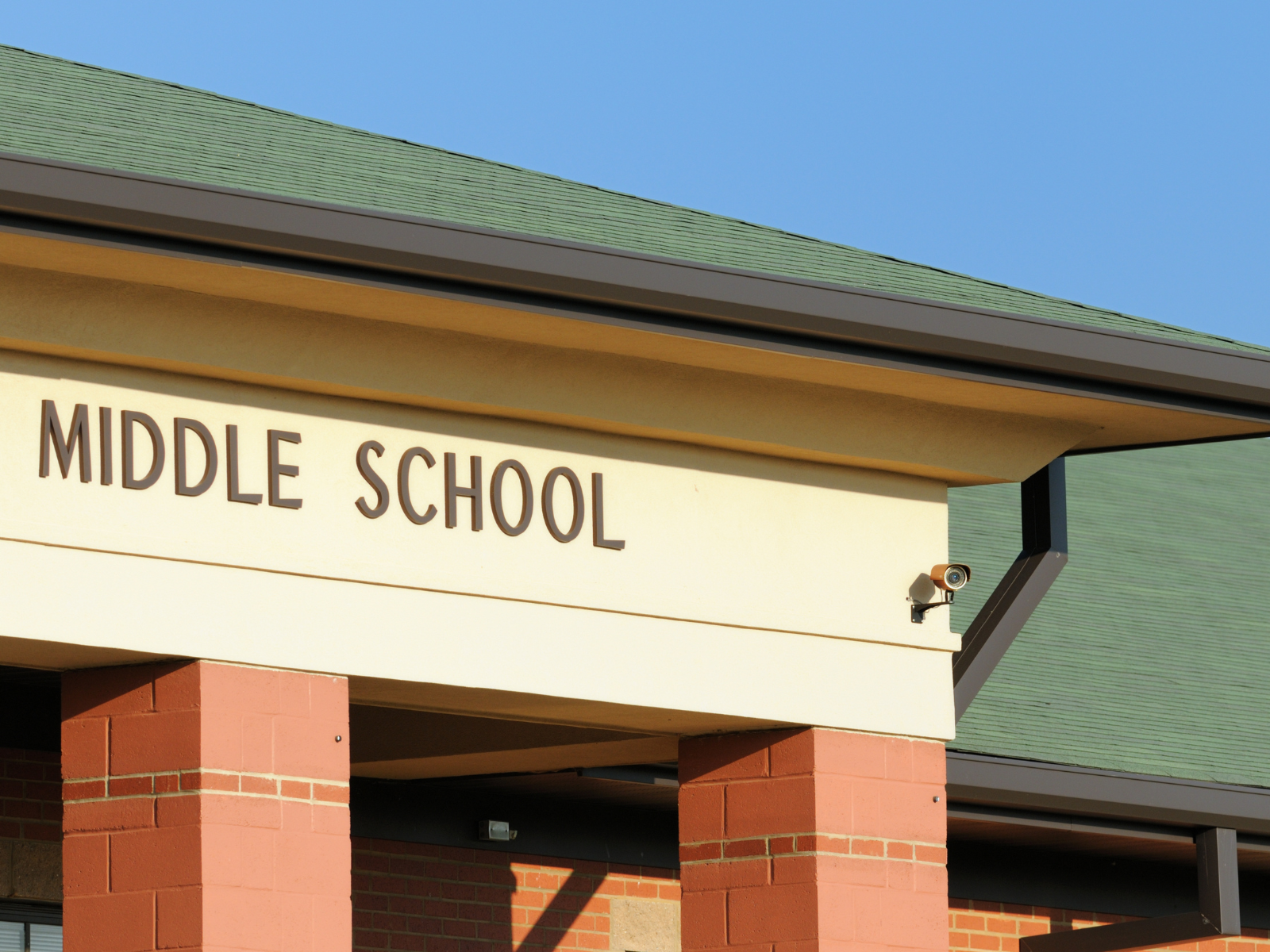
The district is considering several options to address the inadequacies of the current middle school (there are many!). Although maintaining or renovating the current building are options, the superintendent, Dr. Sanville, recommended that the district build a new middle school to best address the full range of inadequacies in the shortest time frame and with the least disruption to education and the school community.
This is a big decision for the district with a big price tag. A feasibility study from Marotta/Main, an architecture firm, provided estimates of costs for each of the three options: Maintaining, Renovating, or Replacing the building. I shared more about the three options and relative cost estimates in this post (scroll down toward the end).
In short, replacing the middle school with a new building is the only option that addresses all of the current building’s failings. None of the options requires a tax increase above the Act 1 Index (essentially inflation). More on that below.
Project timeline
The district began assessing and considering how to remediate Patton’s shortfalls in January 2024. Since then, this topic has been the subject of many public meetings.
Dr. Sanville discussed the matter in greater depth in his presentation to the board on Monday, February 10, at the board meeting. Significant issues with the current building include:
lack of ADA compliance
poor air quality
asbestos
failing and insufficient number of bathrooms
significant problems with old ceilings, electrical systems, elevators, and HVAC
corridors that are too narrow
lack of natural light
degrading parking lots
an old roof past its expected useful life
and traffic that is… none other than a hot mess (if you’ve been to school pickup, you know… 😬).
For those interested in facts and details, the district prepared a page dedicated to this matter on its website. They’ve answered many FAQs. You can review past board meetings in which the administration offered details about the project’s purpose, the building’s inadequacies, details about the estimates around cost, and a timeline of how the project could proceed. Dive in if you wish.
Misinformation swirls
As the school board has approached a vote on the next step in the last few weeks, a whirlwind of energy has risen around the topic.
It culminated in a school board meeting on Monday, February 10, with a public comments section rife with misinformation and vitriol. Some good-faith residents expressed concerns and a willingness to engage in genuine dialogue. We should all appreciate their attention to the matter and willingness to share their perspective with the public (even if they have different opinions).
Unfortunately, they were overshadowed by a small group of Chadds Ford residents looking to make a big impression (in a less-than-impressive way).
Building on a misleading flyer attached to many mailboxes in the district, comments at the board meeting included character assaults, lies about the district’s and school board’s willingness to meet with and discuss specific concerns with residents, and disingenuous discussion about tax implications.
The same group claiming that the board is unwilling to engage in meaningful discourse spent the night shouting over others, speaking out of turn, name-calling, threatening class action lawsuits against the district and any individual board members if they vote for the project, and offering “just asking questions” implications of bribery and backdoor deals. That’s no way to foster meaningful discourse.
Many of this group left after public comment before the board members could respond to their concerns. How can one claim to want meaningful discourse when they walk away from the table as soon as it’s the other person’s turn to speak?
They shouted about not hearing enough from the school board yet left without listening to the board members’ responses. Some even turned their backs on board members, disruptively and dismissively chatting and slowly putting on jackets mid-meeting while board members patiently waited to proceed. That demeanor walked any good-faith motive right out the door.
These are our neighbors; it was so disappointing. This conversation doesn’t have to be so contentious or riddled with misinformation. We can disagree better. 💛
Different perspectives are valid
Discussing an investment as significant as nearly $70 million (minimum) and up to $120 million is no small commitment; it’s well worth good-faith discourse. Raising genuine considerations about how investing in a new building benefits educational goals and how that money might be spent to support robust educational and community goals are worthy conversations.
As I mentioned above, I had great conversations with many fellow UCF parents about this, and they were all respectful, even when we disagreed on the outcome. Those discussions focused on sharing perspectives, not changing minds. I hope we can lean into respectful discourse in our community and prioritize less of what we saw at the school board meeting.
So, let’s clear up some confusion
Following my refreshing conversations (including productive disagreements) with the friends I mentioned above, some questions seemed worth clarifying.
What is the board actually voting on?
Next Monday, the board will vote on whether or not to proceed with the RFP (request for proposal) process to design the building and obtain quotes to nail down the project’s actual cost. They are NOT voting on whether to commit to a new building.
How does a $120 million construction cost not increase taxes astronomically?
It’s fair to initially think that a $120 million project would increase our taxes, but that’s not the case. The district has committed NOT to raise taxes above the Act 1 Index (essentially inflation). Without a referendum, they are not legally allowed to pursue “thousands of dollars in tax increases” per household yearly, as purported by the misinformation spread through flyers, social media, and word of mouth.
So how does this work?
In simple terms, the district has existing loans from previous projects already included in the current budget that our taxes cover now. Those loans will be paid off in a few years, and the district will take out new loans (replacing the old ones) to cover the cost of the middle school. The difference in the cost of the debt to taxpayers is below the Act 1 Index threshold, so no referendums or tax spikes are needed to cover the middle school construction.
The family car analogy
It seems confusing, but an analogy might help. Let’s say a family has two cars. Car 1 is five years old, has 50k miles on it, and is in good condition. The family will make the final $500 monthly loan payment on the car next month.
Car 2 is 15 years old, has 150k miles on it, and needs a new transmission, tires, battery, and paint job. Due to its age and condition, it periodically has issues and needs to be taken to the shop. This disrupts the family’s life when the car doesn’t start or leaves them without a second car while it’s unexpectedly repaired.
The family will no longer have the $500 loan payment from Car 1 in their budget, so it frees up cash flow to repair or replace Car 2. They could choose to repair Car 2 over time, periodically borrowing money to pay for repairs and maintenance on a car that’s 1) nearing its end of life and 2) creates logistical havoc occasionally.
Alternatively, they could take out a $510/month loan to replace Car 2 with a new, more reliable car that better suits their current family size and stage of life, has modern safety technology, and will last much longer than the remaining life of the aging Car 2.
If the family chooses to replace Car 2, they will incur new debt of $510/month. However, their monthly cash outflow will increase by only $10 because they will stop paying $500/month for the loan for Car 1.
This is a simplified analogy, but it mirrors the principle the school district faces with the current middle school. Patton needs a lot of love (not a little, but a lot!). Because the district’s existing loans are ending, it provides an opportunity to dedicate cash from debt to constructing a new middle school without a significant increase in cash outflow (which would need to be covered by new tax revenue).
Social media financial analysis + making decisions based on facts
Some citizen scientists have performed financial analyses to suggest that the district’s estimates are incomplete, misleading, and/or incompetent. Using the family car analogy, they calculate the cost of the new car ($510/month), suggesting that the full amount drives the tax increase. Then, they compare that analysis to the $10 per month increase projected by the district and are outraged at the difference.
But this isn’t comparing apples to apples. Their analysis essentially says, “the new car costs $510/month” (which is true), but it fails to acknowledge that “since we just paid off Car 1, net cash outflow only goes up $10/month.” The second piece of that scenario is significant; it changes the calculus and opinion of many stakeholders.
Can you predict the future?
The disinformation flyer passed around the community stated, “School taxes will increase (thousands/year),” which is impossible without a referendum. It also states that “YOUR HOME VALUES WILL PLUMMET.”
I’m skeptical that we have any local fortune tellers in Chadds Ford who can predict the future. But even if we make an educated guess, a brand new middle school would likely attract new families to our district, which should increase its desirability.
We have the good fortune of living in a district with one of the highest average property values in the state. I don’t foresee families looking for a top school district who can afford the average property in our area being deterred by the incremental property taxes the school district anticipates, particularly when it comes with a modern middle school.
What about the value of the investment and other stakeholders?
Separately, the tax consequences have overshadowed conversations about the value of what we’re getting and how other non-tax-paying stakeholders are impacted. The discussion among the community has been heavily focused on “how much are we spending?” and left little space for “what are we paying for and why do the people who use it every day think we need it?” Neither piece of information is meaningful without the other.2
The school has presented the benefits and opportunities at a high level, though I think more detail and storytelling around the “why” could be helpful. The discourse against financial investment has mostly ignored the benefits.
We may not all agree on whether a new middle school is worth a $120M investment (and really, it’s a $50M incremental investment over the Maintain option, which is the bare minimum alternative). That’s a very valid conversation. But what that $120M buys us relative to what we have now is an imperative piece of this conversation.
I’ve talked to several teachers about the middle school. They resoundingly believe we need to rebuild. Wouldn’t they know best?! 😉
The deteriorating building’s upkeep disrupts learning. There is little to no space for collaborative work. Science labs and STEM infrastructure are insufficient to meet modern educational goals. Degraded and failing infrastructure causes multiple health concerns. The building is also not ADA-compliant.
Recommend and retire?
Dr. Sanville basically told the school board, “You should build a new middle school. ✌🏻out, and good luck with that.” I find this more funny than anything.
Some people are bothered by this and feel he should see such a project through the completion. I think that’s an unfair and unrealistic expectation for any superintendent or senior leader. We don’t expect CEOs, mayors, or township supervisors to propose and see through the completion of infrastructure projects only when they can manage them to the end.
Has anyone asked why previous Chadds Ford township supervisors initiated the Walkable Chadds Ford project without a commitment to see it through to the end? Of course not, because that would be silly. Most of us are glad that previous supervisors invested effort in this community project, despite knowing they couldn’t finish it during their respective terms, because it would be good for the township.
The new middle school project will take a decade from start to finish. Most executives don’t stay in their roles for a decade, let alone remain that long after they’ve gotten their feet wet long enough to understand needs for and pursue large infrastructure projects. We would miss so many opportunities for good growth projects if we expected them only to be completed under one leader.
More Q&A
Plenty of other great questions came up about the project. Check out the district’s Middle School Feasibility Study page for more factual information, including many answers to common questions.
Let your voice be heard
If you want to share your perspective with the district about whether or not to pursue an RFP, you can attend the next school board meeting on February 18, at which time the board will vote on the measure. In the interest of civility and kindness, let’s all bring our integrity and good intentions along with our opinions and notes.
Speaking at the meeting isn’t the only way to let the board know how you feel. Some people have logistical conflicts. Some prefer not to speak in public. Several people expressed concerns that speaking up would put a target on their back for retaliation. Such a bummer… 😞
No matter your reason for skipping public comment, you can always email the school board members. Their email address is [email protected], and you can find a link to email them on the UCF School Board home page here.
From a friend who shared this quote with me during our discussions about a new middle school in Unionville:
“Allow yourself the uncomfortable luxury of changing your mind.”
May the community be open to constructive discernment based on truth and integrity. Thanks to all who were personally willing to chat about the new middle school with me in good faith and came to the conversation with the best of intentions. You know who you are, and I value and appreciate you. 💛
This quote came from a friend about our discussions regarding the middle school because none of us have kids who will actually use the school. We are navigating this conversation for the benefit of children who are not our own.
Imagine someone asked if you wanted to buy something without explaining what you were paying for. Ha. “Want to buy this for $120M?” “Ugh… what exactly am I buying, and why do you think I need it???” 👀